What You Need to Know About Vitamins and Vitamin B12

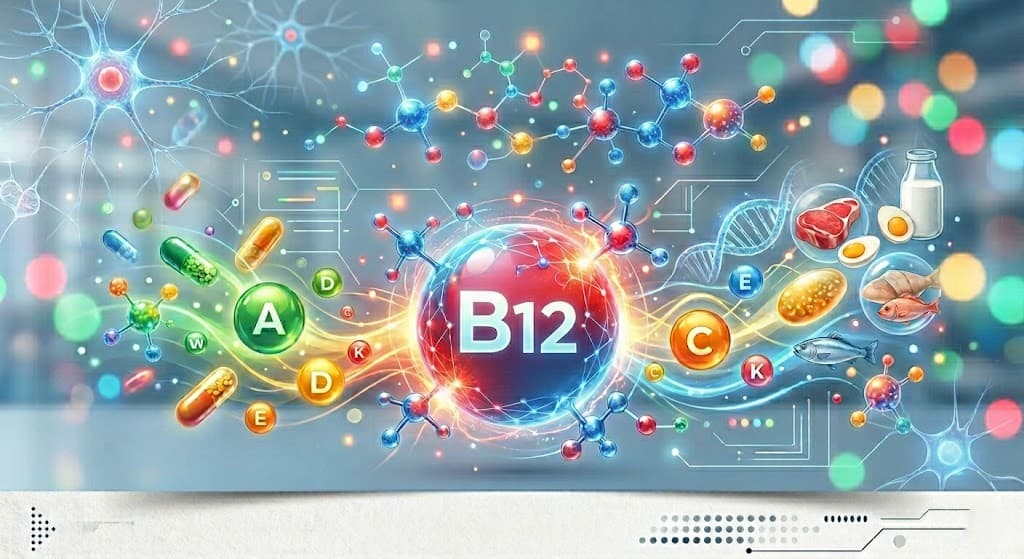
What is a Vitamin?
Vitamins are indispensable nutrients for a healthy life. The term "vitamin," first introduced in 1912 by Polish biochemist Casimir Funk, means "amine necessary for life." These substances, which are essential for the human body, are divided into two main groups: fat-soluble and water-soluble vitamins.
Among the most notable water-soluble vitamins is the B vitamin group. This group consists of a total of 8 vitamins: thiamine (B1), riboflavin (B2), niacin (B3), pantothenic acid (B5), pyridoxine (B6), biotin (B7), folic acid (B9), and cobalamin (B12).
Basic Information About Vitamin B12
Vitamin B12, also known as cobalamin, is primarily a water-soluble vitamin. It is stored in the body in limited amounts, mostly in the liver. Approximately 4 milligrams of vitamin B12 are stored in the body of a healthy adult. Due to its limited storage capacity, B12 must be regularly obtained through diet.
Vitamin B12 is mainly found in animal-based foods. The human body can synthesize a small amount of this vitamin in the intestines, but the amount obtained through natural nutrition is much more important for overall health. In addition, vitamin B12 is sensitive to high temperatures and some loss may occur during cooking.
Roles in the Body:
It works together with folic acid in the formation of red blood cells.
It plays a key role in DNA synthesis and in the formation of the myelin sheath around nerve cells. Myelin accelerates nerve transmission.
It helps in the effective utilization of amino acids and certain minerals (especially zinc and magnesium).
It also plays a role in the reabsorption of B12 synthesized in the body.
What Symptoms Can B12 Deficiency Cause?
Vitamin B12 deficiency can manifest with different symptoms in various organs and systems. Some of the most common findings are as follows:
Anemia, especially pernicious anemia, may develop. In this case, palpitations, fatigue, reduced exercise capacity, difficulty concentrating, and dizziness may be observed.
Redness and burning on the tongue, sores in the mouth, muscle cramps at night in the legs, and digestive problems such as diarrhea may occur.
Tingling, numbness, and neurological disorders may be seen in the hands, arms, legs, and feet. In advanced cases, there may be slowing of mental functions, memory problems, and attention deficit.
Especially in older adults, neurological symptoms such as memory loss and forgetfulness may become prominent. Since B12 absorption and storage may decrease with age, elderly individuals should be monitored more closely in this regard.
Some studies have shown that B12 deficiency may also play a role in the development of depression.
Long-term B12 deficiency may lead to a decrease in metabolic rate by restricting new cell production.
Hair loss may occasionally be seen in B12 deficiency. However, it should be remembered that genetic factors are more prominent among the main causes of hair loss.
Which Foods Contain B12?
Vitamin B12 is mostly found in animal-based foods. In healthy individuals, the blood B12 level is about 150 pg/ml, and levels below 80 pg/ml are considered deficient. The recommended daily intake is on average 2.4 micrograms.
Foods rich in B12 include:
Offal such as liver and spleen
Shellfish such as mussels, oysters, and shrimp
Fish such as trout, tuna, and mackerel
Milk, yogurt, cheese, and other dairy products
Eggs

Common Causes of B12 Deficiency
Malabsorption (for example, after stomach or intestinal diseases or various surgeries)
Long-term inadequate and unbalanced nutrition, especially in vegetarians or vegans
Long-term use of certain medications such as omeprazole or metformin
Decreased stomach acid production with age
Health Problems That May Develop Due to B12 Deficiency
Pernicious anemia: The immune system may attack stomach cells and prevent B12 absorption.
Additionally, anemia due to folic acid deficiency may occur together with B12 deficiency and reduce red blood cell production.
The nervous system may be affected, leading to tingling, numbness, and balance disorders.
Long-term B12 deficiency may be a risk factor for cardiovascular diseases.
It may impair bone health, predisposing to osteoporosis and bone fractures.
How to Prevent and Treat B12 Deficiency?
When B12 deficiency is detected, the underlying cause should first be determined. The deficiency may be due to inadequate intake (for example, those who do not consume animal foods), malabsorption (stomach or intestinal diseases, surgical procedures), or certain medications.
If the deficiency is due to inadequate intake, B12-rich foods should be added to the diet and, if necessary, oral supplements (tablet or sublingual forms) are recommended. However, in cases of malabsorption, such supplements are not sufficient; in this case, vitamin B12 is administered by injection.
The most effective way to prevent vitamin B12 deficiency is to consume foods containing B12 in a balanced and regular manner. Especially individuals at risk (vegetarians, the elderly, those who have undergone gastrointestinal surgery) should consider supplementation options under medical supervision.
Frequently Asked Questions
1. How is vitamin B12 deficiency diagnosed?
B12 deficiency is usually noticed with symptoms such as fatigue, forgetfulness, anemia, and numbness in the hands and feet. Some individuals may also experience digestive system problems, tongue sensitivity, and neurological issues. A blood test is required for a definitive diagnosis.
2. Who is at risk for B12 deficiency?
Vegans and vegetarians who do not consume animal foods, individuals who have undergone gastrointestinal surgery, people over the age of 65, and those with chronic gastrointestinal diseases are at higher risk.
3. Is excess vitamin B12 harmful?
Since vitamin B12 is water-soluble, excess amounts are usually excreted in the urine and the risk of toxicity is low. However, continuous use of high-dose supplements should only be done under medical supervision.
4. Can B12 deficiency cause hair loss?
B12 deficiency may trigger hair loss in some individuals. However, the main cause of hair loss is often related to genetic and hormonal factors.
5. How should B12 supplements be used?
If a deficiency is detected, your physician may recommend B12 supplementation in the form of oral tablets, sublingual tablets, or injections. The appropriate dose and treatment method are determined according to the cause of the deficiency.
6. Which foods contain B12?
Main sources include liver, red meat, shellfish, fish, milk, yogurt, and eggs.
7. How can vegans protect themselves from B12 deficiency?
It is not possible to get enough B12 from a plant-based diet. Therefore, it is recommended that vegan individuals use regular B12 supplements and be under medical supervision.
8. Does B12 deficiency cause depression?
Some studies suggest that B12 deficiency may be associated with psychological symptoms such as depression and decreased cognitive function.
9. Why is vitamin B12 important during pregnancy?
Adequate B12 intake during pregnancy is critical for the development of the baby's brain and nervous system. In case of deficiency, the risk of congenital anomalies may increase.
10. What happens if B12 deficiency is not treated?
If long-term B12 deficiency is not treated, neurological damage may become permanent, and anemia and bone health pulcerations may occur. Therefore, early diagnosis and treatment are important.
11. Is it necessary for everyone to take supplements?
In individuals who eat a healthy and balanced diet, additional supplementation is generally not required. However, in at-risk groups, it should be started upon a doctor's recommendation.
12. Does vitamin B12 protect against cancer?
Current scientific data show that there is no clear relationship between B12 supplementation and cancer prevention. In addition, there is no evidence that excess supplementation reduces the risk of cancer.
References
World Health Organization (WHO). Vitamin and Mineral Requirements in Human Nutrition (Report).
Centers for Disease Control and Prevention (CDC). Vitamin B12 Fact Sheet.
The National Institutes of Health (NIH) – Office of Dietary Supplements. Vitamin B12: Fact Sheet for Health Professionals.
American Society of Hematology. Pernicious Anemia.
British Dietetic Association (BDA). Vitamin B12 — Food Fact Sheet.
MedlinePlus. Vitamin B12 Deficiency.