Nasal Bleeding: Causes, Management, and Considerations

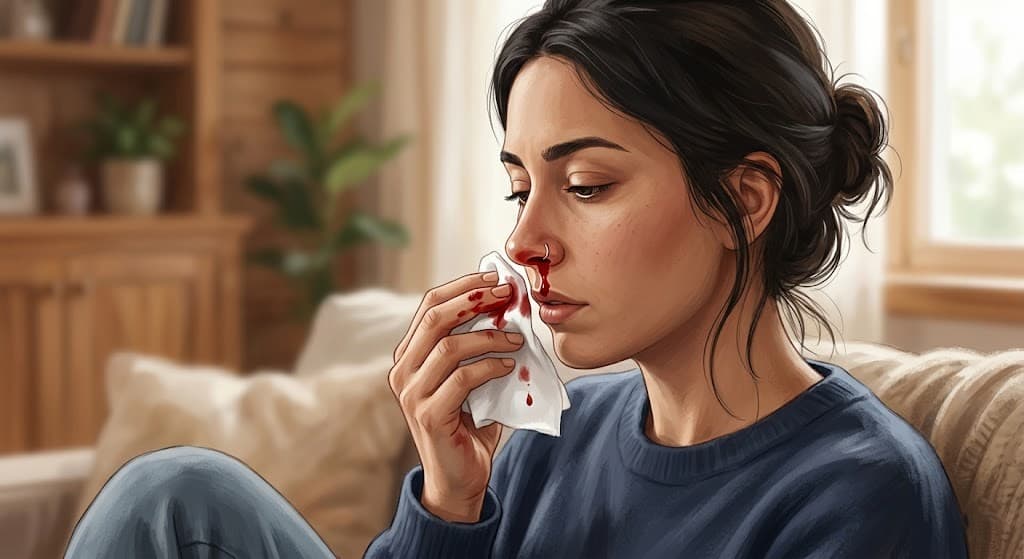
Nosebleed (epistaxis) is a common symptom encountered in daily life and usually does not constitute a serious health problem. This condition, which generally stops on its own, may occasionally recur or, albeit rarely, cause serious complications. Especially in children and the elderly, nosebleeds can be a source of concern for families and individuals. If the source and causes of the bleeding are properly understood, most nosebleeds can be effectively controlled at home with simple methods.
Where and Why Do Nosebleeds Occur?
Nosebleeds mostly occur due to irritation or injury of the superficial and thin vessels in the nasal mucosa. In the anterior part of the nose, there is an area known as the Kiesselbach plexus, which is a convergence point for many vessels. The majority of nosebleeds originate from this region. Although damage to the vessels is often caused by trauma, dryness, or infection, in some cases, underlying systemic diseases may also be responsible.
Types of Nosebleeds and Clinical Features
Nosebleeds are classified into two main groups according to the anatomical region where the bleeding starts:
1. Anterior nosebleeds:
This is the most common type. It usually originates from the Kiesselbach plexus and can often be easily stopped at home or with simple medical interventions.
2. Posterior nosebleeds:
These are less common but generally occur in elderly individuals and those with severe illnesses. The source of bleeding is usually the larger vessels at the back of the nose. This type of bleeding can be more severe and typically requires treatment in a hospital setting with the support of an otolaryngologist (ENT specialist).
From a global perspective, the true frequency of nosebleeds is not exactly known, as many mild and self-limiting cases are not reported to healthcare institutions. Nevertheless, some nosebleeds can lead to significant blood loss and may require urgent medical intervention.
What Are the Main Causes of Nosebleeds?
The factors causing nosebleeds can be grouped into three main categories:
1. Local causes:
Direct trauma to the nose or nose picking,
Insertion of foreign bodies into the nose (especially in children),
Nasal and sinus infections,
Irritating substances or dry air,
Anatomical abnormalities (e.g., septal deviation),
Postoperative healing period after nasal surgeries,
Frequent use of nasal sprays (especially those with corticosteroid or antihistaminic properties),
Mucosal sensitivity caused by allergic rhinitis or other upper respiratory tract infections.
Especially in children, insertion of foreign bodies into the nose or recurrent trauma are among the leading causes.
2. Systemic causes:
High blood pressure (hypertension),
Bleeding or clotting disorders,
Certain types of blood-related cancers,
Blood-thinning medications (e.g., aspirin, warfarin),
Liver and kidney diseases,
Aging and increased vascular fragility with age.
It should be noted that although hypertension is rarely a direct cause, long-term high blood pressure can weaken certain vessels.
3. Idiopathic causes:
In some cases, the source of the nosebleed cannot be clearly identified. Such bleedings are termed 'idiopathic.'
In Which Situations Should Nosebleed Symptoms Be Taken Seriously?
Most nosebleeds are mild and temporary. However, in the following situations, caution should be exercised and medical support should be sought:
If the bleeding does not stop despite 10-20 minutes of direct pressure,
If the amount of bleeding is excessive and recurrent,
If bleeding or bruising is observed in other parts of the body,
If the person is taking medication that increases bleeding tendency or has a known bleeding disorder,
If more than one nosebleed occurs within the same day in a short period,
If dizziness, palpitations, or fainting sensation due to blood loss is experienced,
If there are additional symptoms such as fever, rash, or confusion along with the bleeding,
If nosebleed occurs especially in young infants.
What Should Be Done in Cases of Unilateral and Sudden Nosebleeds?
Unilateral nosebleeds usually develop due to injury to the vessels on that side of the nose. However, in some cases, they may also be a sign of rare but significant health problems such as tumors. Sudden-onset nosebleeds are mostly triggered by trauma, nose picking, infection, dry air, or high blood pressure.
Safe Ways to Manage Nosebleeds at Home
The following simple steps are generally effective when a nosebleed starts:
Stay calm and sit upright.
Tilt your head slightly forward. This prevents blood from flowing into the throat and being swallowed.
Firmly pinch both sides of the nose (always apply pressure to the bleeding nostril with a finger) continuously for about 10 minutes.
Do not release the nostrils until the bleeding stops.
If possible, apply ice to the bridge of the nose or the nape of the neck, but placing ice directly on the nose is generally not recommended.
Avoid blowing your nose or picking it for 24 hours after the bleeding stops.
If the room air is very dry, use humidifiers to protect the nasal mucosa. Saline sprays and nasal moisturizing creams can also be used.
If the nosebleed is severe, recurrent, or accompanied by additional symptoms, it is important to consult a doctor as soon as possible.
Nosebleeds in Children: What Should Be Considered?
Nosebleeds are quite common in children, especially between the ages of 2 and 10. These bleedings are usually mild and resolve spontaneously in a short time. Nevertheless, it is generally sufficient for families to remain calm and apply the simple precautions described above. Nosebleeds seen in infants are less common and require careful medical evaluation.
In cases of frequent or persistent nosebleeds in children, it is recommended to consult a pediatrician or ENT specialist.
In Which Situations Should Emergency Medical Assistance Be Sought?
The following situations require urgent medical attention for nosebleeds:
If the bleeding is profuse and prolonged,
If bleeding occurs more than once in the same day,
If additional symptoms (fever, rash, vomiting, altered consciousness, rapidly increasing pulse, shortness of breath) develop,
If there is bleeding from the mouth, gums, urine, or stool along with the nosebleed,
If the person has a history of bleeding disorder, clotting problem, or is using blood thinners,
If a fever above 38.5°C develops,
If dizziness or fainting sensation occurs.
Most nosebleeds can be managed with simple measures, but in the situations listed above, it is necessary to seek medical attention without delay.
Frequently Asked Questions
1. At what ages are nosebleeds most common?
Nosebleeds can occur at any age. They are especially common in children (ages 2-10) and in older adults (generally over age 50).
2. Why does my nose bleed suddenly?
Sudden nosebleeds are usually triggered by minor trauma to the nose, nose picking, infection, dry air, or sometimes high blood pressure.
3. Why does my left or right nostril bleed more frequently?
Bleeding can occur in either nostril. Sometimes, differences in the vascular structure of the nose or the side exposed to recurrent trauma may be more sensitive than the other.
4. How can I stop a nosebleed at home?
Tilt your head forward, firmly pinch the soft part of your nose with your fingers for about 10 minutes, and do not release until the bleeding stops.
5. When should I consult a doctor?
If the bleeding persists despite 10-20 minutes of pressure,
If the bleeding does not stop, occurs very frequently, or if additional symptoms develop, a healthcare facility should be consulted.6. Can a nosebleed be a sign of a disease?
Yes, sometimes nosebleeds may indicate underlying blood disorders, tumors, or systemic diseases. Persistent and unexplained nosebleeds should be evaluated seriously.
7. Can blood loss be serious?
Most nosebleeds are mild and temporary. Rarely, prolonged or heavy bleeding can cause significant blood loss.
8. What should be done to prevent nosebleeds?
It is recommended to keep the environment adequately humidified, avoid the habit of picking or manipulating the nose, and use nasal sprays only as advised by a doctor and in the correct manner.
9. Are nosebleeds dangerous in children?
They are usually mild and temporary. However, in infants, or in cases of recurrent, persistent, or bleeding accompanied by other symptoms, a doctor should definitely be consulted.
10. Do nasal sprays cause nosebleeds?
Incorrect or excessive use of some nasal sprays can cause dryness and irritation of the nasal mucosa, which may facilitate bleeding.
11. Is it correct to tilt the head back during a nosebleed?
No, it is safer to lean the head forward and prevent swallowing of blood.
12. Is applying ice beneficial during a nosebleed?
Gently applying ice to the top of the nose or the nape of the neck may help some individuals, but it is not recommended to apply it directly inside the nose or nostrils.
13. Does dry air increase nosebleeds?
Yes, dry environments can irritate the nasal mucosa and increase the risk of bleeding.
14. Is unilateral nosebleed a sign of a tumor?
Most unilateral nosebleeds are due to simple causes; however, in unusual, recurrent, or persistent cases, significant underlying causes such as tumors should be ruled out.
15. What other symptoms should be watched for along with a nosebleed?
Findings such as dizziness, palpitations, confusion, fever, rash, vomiting, and bleeding in other parts of the body require urgent evaluation.
References
World Health Organization (WHO) — Epistaxis: Clinical guidance
American Academy of Otolaryngology–Head and Neck Surgery Foundation
Centers for Disease Control and Prevention (CDC) — Common Causes of Epistaxis
British Medical Journal (BMJ) Best Practice—Epistaxis
Mayo Clinic Patient Resources—Nosebleed Management