Burning Sensation on the Skin After Exposure to Hot Pepper: Causes, Symptoms, and Preventive Measures

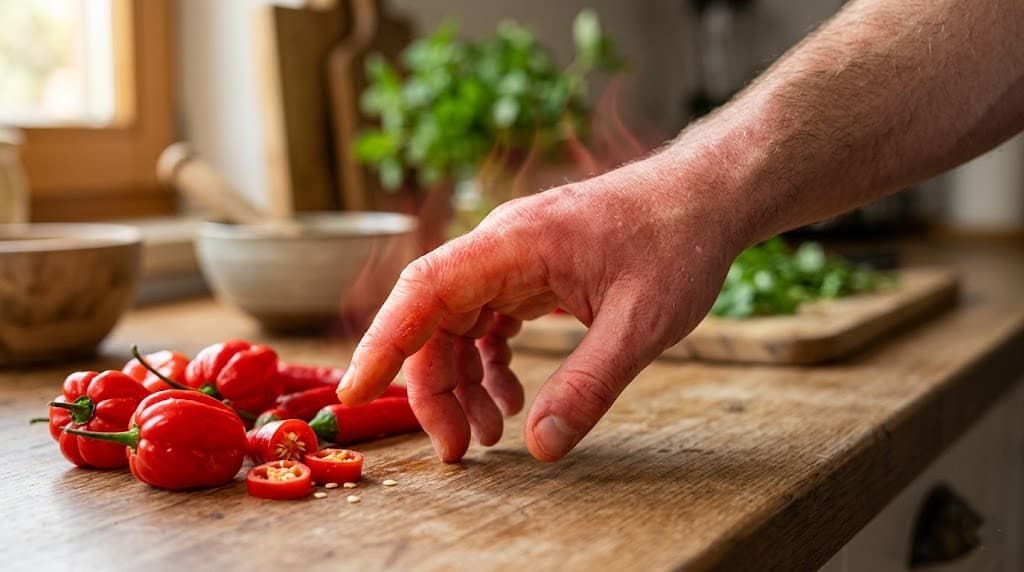
The main reason for the burning and sensation of heat that occurs in skin areas that come into contact with hot peppers is capsaicin, a substance naturally found in peppers. When capsaicin comes into contact with the skin, it stimulates nerve endings, causing a strong burning and painful sensation. However, this burning is not in the same category as classic thermal, chemical, or severe tissue-damaging burns. Nevertheless, complaints caused by capsaicin can be quite intense and may last disturbingly long. Therefore, it is of great importance to be careful and take precautions when working with hot peppers.
In Which Situations Is Hot Pepper Contact More Common?
Direct contact of hands with hot peppers is common during kitchen tasks such as chopping peppers, preparing pickles, or canning at home. Especially touching very hot pepper varieties without gloves can cause intense burning of the hands in a short time. The burning is usually first felt in the hands; however, if pepper residue on the hands comes into contact with the face or eyes, burning and stinging may also occur in these areas. Rarely, inhalation of airborne pepper particles or prolonged respiratory exposure can cause a severe burning sensation in the mouth and nose, and even difficulty breathing.
This condition, which is more commonly seen in those working in kitchens or preparing preserves/pickles at home, can affect other parts of the body besides the hands if precautions are not taken.
What Are the Causes of Hot Pepper Contact?
The main causes that can lead to hot pepper burns on the skin are as follows:
Chopping or cleaning high-heat peppers with bare hands,
Not using protective tools such as forks or gloves during pepper consumption,
Not taking protective measures when cleaning the inside of peppers,
Rarely, prolonged exposure in an environment where peppers are handled.
The amount of capsaicin in each type of hot pepper may vary; therefore, the severity of the burning sensation also depends on the type of pepper exposed, the duration of contact, and the individual's skin sensitivity. Using protective gloves or taking appropriate precautions in the kitchen can significantly reduce this risk.
Symptoms That May Occur After Hot Pepper Contact
Common findings that may develop after pepper contact are as follows:
Intense burning and stinging felt in the hands,
Sudden warmth and redness in contact areas,
Itching, redness, or temporary swelling on the body,
Burning or stinging in the relevant areas when hands touch the eyes, face, or neck,
Rarely, small blisters may form on the skin,
If affected through the respiratory tract, burning in the throat, cough, or difficulty breathing may occur.
These findings are usually temporary. However, if symptoms are severe or accompanied by respiratory distress, it is necessary to consult a healthcare facility.
What Should Be Done After Hot Pepper Contact?
In cases where burning is limited to the skin, mostly the hands, some methods that can be applied at home are as follows:
1. Wash the affected area thoroughly with cold water. Since capsaicin is dissolved in oil, water alone may not be sufficient.
2. Gently clean the skin with a mild soap without excessive rubbing.
3. Rubbing the skin with dairy products such as milk, yogurt, or kefir may alleviate the effect of capsaicin. The fat in dairy products can dissolve capsaicin and help relieve the burning sensation.
4. Lemon juice may provide relief for some people due to its mild acidic effect, but it is not recommended if there is an open wound or severe redness.
5. Contact with tomato juice or tomato may have a refreshing effect for some people due to its natural lycopene content.
6. Applying burn-effect moisturizers or barrier creams that protect the skin may be beneficial.
7. A cold compress can provide short-term relief.
If complaints do not subside quickly, if the burning/pain increases, or if serious reactions (blisters, widespread swelling, raised areas) begin on the skin, medical help should be sought without delay.
What Should Be Done If the Respiratory Tract Is Affected?
If difficulty breathing, shortness of breath, or severe coughing develops after contact with hot peppers;
Immediately go outside for fresh air,
If necessary, seek medical oxygen support,
Go to the nearest healthcare center immediately.
Although serious respiratory symptoms are rare, rapid intervention is vital in such cases.
What to Do If the Situation Does Not Improve With Home Applications?
If the burning and pain do not go away after the precautions you take at home, increase in severity, or are felt in other areas, you should definitely consult a healthcare facility. Health professionals can prescribe appropriate creams or ointments after the necessary evaluation. If necessary, other supportive treatments may also be applied to reduce the risk of advanced allergic reactions.
Early intervention and proper care usually ensure that skin complaints caused by hot pepper contact subside in a short time.
Frequently Asked Questions
1. Does the burning caused by hot pepper damage the skin?
The burning caused by hot pepper usually does not cause permanent damage to the skin. Although capsaicin irritates the skin, the effect is mostly temporary and relief can be achieved with appropriate measures. For severe or prolonged complaints, a doctor should be consulted.
2. How long does it take for a hot pepper burn to heal?
In most cases, complaints subside within a few hours. Rarely, in highly sensitive individuals, this period may last several days.
3. Is it sufficient to clean only with water?
Since capsaicin is a fat-soluble substance, cleaning with water can be partially soothing, but products such as milk or yogurt are more beneficial for effective cleaning and relief.
4. What should be done if hot pepper comes into contact with the eye?
The eye should be washed immediately with plenty of water and should definitely not be rubbed. If complaints persist or vision problems occur, an ophthalmologist should be consulted as soon as possible.
5. In which situations should I see a doctor?
If your complaint does not go away, increases, or if you experience difficulty breathing, swelling of the lips or mucosa, or intense stinging/burning, medical support should be sought immediately.
6. Does wearing gloves prevent hot pepper burns?
Yes, proper use of gloves largely prevents the hands from coming into contact with capsaicin and the formation of burning and other skin complaints.
7. Do natural products such as yogurt, milk, or lemon really work?
For most people, dairy products are effective in removing capsaicin from the skin. The acidic effect of lemon may work for some people; however, it may not be suitable for sensitive skin.
8. Does the burning caused by hot peppers in food also occur in the mouth?
Yes, hot peppers can also cause burning in the mouth. Dairy products can also help relieve burning inside the mouth.
9. Is it correct to rub or scratch the burned area?
No, rubbing the area should be avoided as it can increase skin irritation and the effect of capsaicin.
10. Is there anything extra to do in case of hot pepper contact in children or those with sensitive skin?
Symptoms may be more severe in children or people with sensitive skin. In this case, quickly cleaning the skin and seeking medical help if necessary is beneficial.
11. Is hot pepper burn equally severe in all skin types?
No, since skin sensitivity varies from person to person, the severity of complaints may also differ.
References
World Health Organization. “Pepper and Capsaicin.” WHO Monographs on Selected Medicinal Plants.
American Academy of Dermatology Association. “Skin contact with irritating plants: Prevention and first aid.”
Centers for Disease Control and Prevention (CDC). “Preventing and Treating Pepper Burns.”