What is Down Syndrome? Symptoms, Causes, and Contemporary Approaches

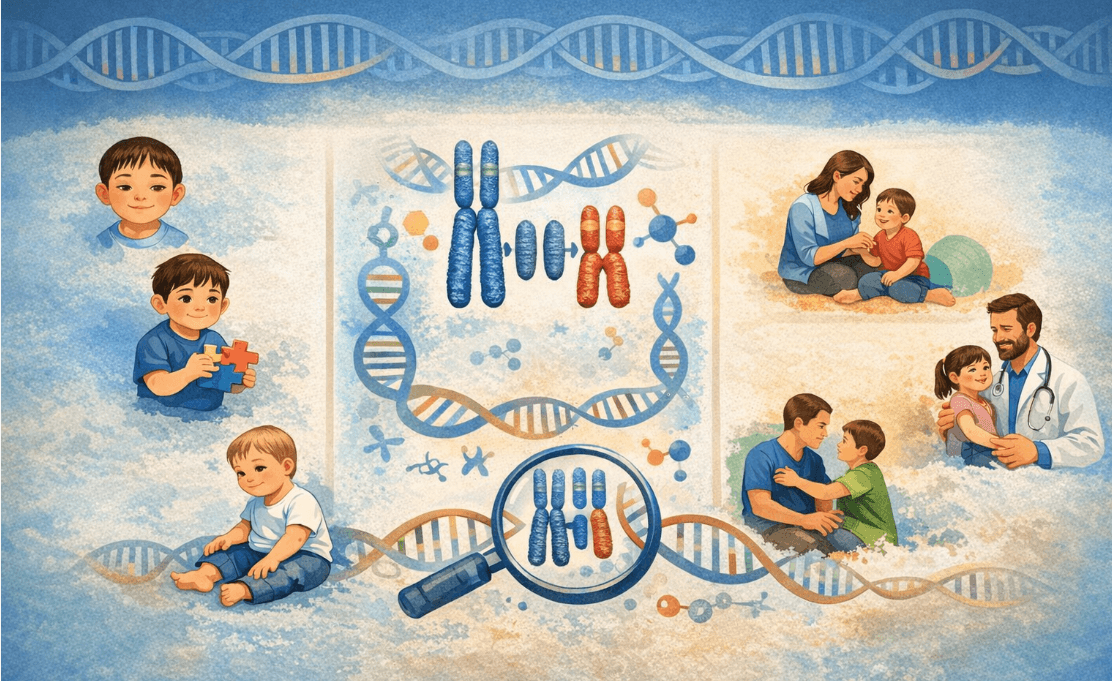
Down syndrome is the most common chromosomal condition worldwide, resulting from the presence of an extra copy of chromosome 21 (trisomy 21). This genetic difference usually leads to certain physical and intellectual developmental differences from birth. With advancing medical opportunities and educational support, Down syndrome can now be managed in a way that allows for a healthier and longer life.
What Are the Main Characteristics of Down Syndrome?
Normally, every human cell contains 46 chromosomes. In individuals with Down syndrome, there is an extra 21st chromosome in the cells; therefore, it is also known as "trisomy 21." Chromosomes carry the genetic information that determines the development and functioning of the body. In individuals with Down syndrome, this extra chromosome can cause some differences in physical and intellectual development. However, the developmental delay and learning difficulties observed in children with Down syndrome are lifelong conditions. Nevertheless, with appropriate education, social support, and advances in medicine, these individuals can lead much more active, productive, and healthy lives.
Distinctive Appearances and Developmental Features of Down Syndrome
Every child is unique; individuals with Down syndrome may also exhibit different characteristics from one another. However, some common physical findings are frequently observed as follows:
Flat facial structure and depressed nasal bridge
Upward slanting eyes
Short and thick neck
Small, low-set ears
Large tongue that often tends to protrude
White spots in the iris of the eyes (Brushfield spots)
Small hands and feet
A single, deep crease in the palm (simian crease)
Loose muscle tone (hypotonia) and joint laxity
Shorter than average stature in both childhood and adulthood
In terms of intellectual development, children with Down syndrome may experience mild to moderate learning difficulties, delayed speech, and slow progress in social skills. Accordingly, attention span is generally shorter, and sometimes impulsive behaviors and difficulty in decision-making may be observed.
What Are the Different Types of Down Syndrome?
Each case of Down syndrome can be identified through genetic analysis.
Basically, three different types of Down syndrome have been defined:
1. Trisomy 21: This is the most common form and constitutes the vast majority of cases. There are three copies of chromosome 21 in all cells of the body.
2. Translocation Type: In a small proportion of individuals with Down syndrome, the extra chromosome 21 is attached to another chromosome. Similar findings to trisomy are observed here as well.
3. Mosaic Type: This is the rarest type. In this case, while some cells in the body have a normal chromosomal arrangement, some cells have an extra chromosome 21. Symptoms are generally milder in the mosaic type.
How Does Down Syndrome Occur? What Are the Risk Factors?
The emergence of Down syndrome is multifactorial and the exact cause is still not fully understood. The most important known risk factor is maternal age. The likelihood of having a baby with Down syndrome is higher in mothers aged 35 and over compared to younger mothers. However, since most children are born to younger mothers who give birth more frequently, the majority of babies with Down syndrome are born to mothers under 35. Having a family member with Down syndrome and certain genetic conditions can also increase the risk.
Diagnosis of Down Syndrome During Pregnancy: What Tests Are Performed?
For the Detection of Down syndrome during pregnancy, different tests are applied both to determine the risk and to make a definitive diagnosis. Screening tests determine the likelihood of the baby having Down syndrome; diagnostic tests provide more definitive information about the chromosomal structure.
Screening Tests
Double Test: Performed between the 11th and 14th weeks of pregnancy, risk is calculated by measuring certain hormones (B-HCG and PAPP-A) in the mother's blood and nuchal translucency by ultrasound.
Triple Test: Performed between the 15th and 22nd weeks of pregnancy; B-HCG, AFP, and estriol levels are checked in the blood. The best results are usually obtained between the 16th and 18th weeks.
Quadruple Test: Preferred between the 15th and 22nd weeks; in addition to those measured in the triple test, inhibin A value is added.
Screening tests only determine the level of risk and may rarely yield false positive or false negative results.
Diagnostic Tests
If a high risk is detected as a result of screening, advanced tests are recommended for definitive diagnosis:
Chorionic Villus Sampling (CVS): Usually performed between the 10th and 12th weeks, a tissue sample is taken from the placenta for genetic analysis.
Amniocentesis: Performed between the 16th and 20th weeks, a sample is taken from the amniotic fluid surrounding the baby for chromosomal analysis.
Percutaneous Umbilical Blood Sampling (PUBS): Usually preferred after the 18th week, blood is taken from the umbilical cord for examination.
These diagnostic tests provide information close to a definitive result; however, they carry some risks such as miscarriage or other complications. Therefore, a physician should always be consulted during the decision-making process.
Genetic Diagnosis and Evaluation of Down Syndrome
If characteristic findings are present when the baby is born, chromosomal arrangements are examined by karyotype analysis from a blood sample. Typically, 47 chromosomes and three chromosome 21s are observed in Down syndrome. In addition, a detailed examination and follow-up are required to identify possible additional health problems, especially congenital heart diseases.
Common Health Problems in Down Syndrome
Some individuals with Down syndrome may have a higher tendency for congenital heart diseases, hearing loss, vision disorders, hypothyroidism, immune problems, and various infections. Frequently encountered conditions include:
Congenital heart defects
Hearing problems
Recurrent middle ear infections
Eye diseases (cataract, blurred vision)
Congenital hip dislocation
Risk of leukemia
Chronic constipation
Hypothyroidism (underactive thyroid gland)
Sleep apnea
Dementia and Alzheimer's disease in advanced age
Obesity
Additionally, urinary tract, respiratory tract, and skin infections may be more common in individuals with Down syndrome. All these health problems can be largely managed and improved with early diagnosis and regular follow-up.
What Is the Treatment and Support Process in Down Syndrome?
There is no direct treatment for the underlying genetic change in Down syndrome. However, with appropriate education, medical follow-up, and social support programs, individuals can maximize their potential. Early special education programs support motor, language, social, and cognitive development. In addition, sensory and movement therapies, family counseling, and medical treatment can improve quality of life.
Especially if women aged 35 and over are planning pregnancy, it is recommended that they have the relevant screening tests before and during Pregnancy and consult an obstetrician and genetic counselor.
Frequently Asked Questions
1. Is Down syndrome hereditary?
Most cases of Down syndrome are not hereditary. A small proportion of cases (especially in the translocation type) may be hereditary; however, it usually occurs as a random genetic change.
2. Is it possible to reduce the risk of Down syndrome during pregnancy?
Other than age, there is no known definite preventive method. However, screening tests are recommended for all pregnant women, regardless of age, both before and during pregnancy.
3. How long can children with Down syndrome live?
As medical care and support increase, the life expectancy of individuals with Down syndrome has significantly lengthened. Many people can reach adulthood and old age in good health.
4. Is Down syndrome seen equally in every race and society?
Yes, Down syndrome is observed at similar rates worldwide, across all ethnic groups and countries.
5. What types of education should be provided to children with Down syndrome?
After individual assessment, it is recommended to offer supportive programs such as special education, physiotherapy, and speech and language therapy.
6. Should other health problems be monitored in babies with Down syndrome?
Yes, regular medical follow-up is necessary for conditions such as congenital heart diseases, hearing and vision problems, and thyroid dysfunctions.
7. How is a definitive diagnosis of Down syndrome made during pregnancy?
A definitive diagnosis is achieved through genetic analysis of samples obtained by diagnostic tests such as CVS, amniocentesis, or PUBS.
8. Are all individuals with Down syndrome affected to the same degree?
No, symptoms and developmental levels vary from person to person; in individuals with the mosaic type, symptoms are often milder.
9. How can learning be supported in children with Down syndrome?
Individual education starting at an early age, play therapies, and participation in social activities positively affect the development of children.
10. Is there a treatment for Down syndrome?
The genetic condition causing Down syndrome cannot be treated; however, with education, therapy, and health support, individuals with Down syndrome can lead active lives in society.
11. What are the risks for women who become pregnant at an advanced age?
The risk of Down syndrome increases in pregnancies at age 35 and above, and this situation requires regular screening and counseling.
12. If there is Down syndrome in the family, is the risk higher in subsequent pregnancies?
If it is the translocation type, the recurrence risk may increase. In other types, the recurrence risk is generally low, but genetic counseling is recommended.
References
World Health Organization (WHO), Down Syndrome Fact Sheet
Centers for Disease Control and Prevention (CDC), Facts about Down Syndrome
American Academy of Pediatrics (AAP), Health supervision for children with Down syndrome
National Down Syndrome Society (NDSS), Down Syndrome Overview
American College of Obstetricians and Gynecologists (ACOG), Screening for Fetal Chromosomal Abnormalities