Innovative Approaches in Modern Dentistry: Solutions for Missing Teeth

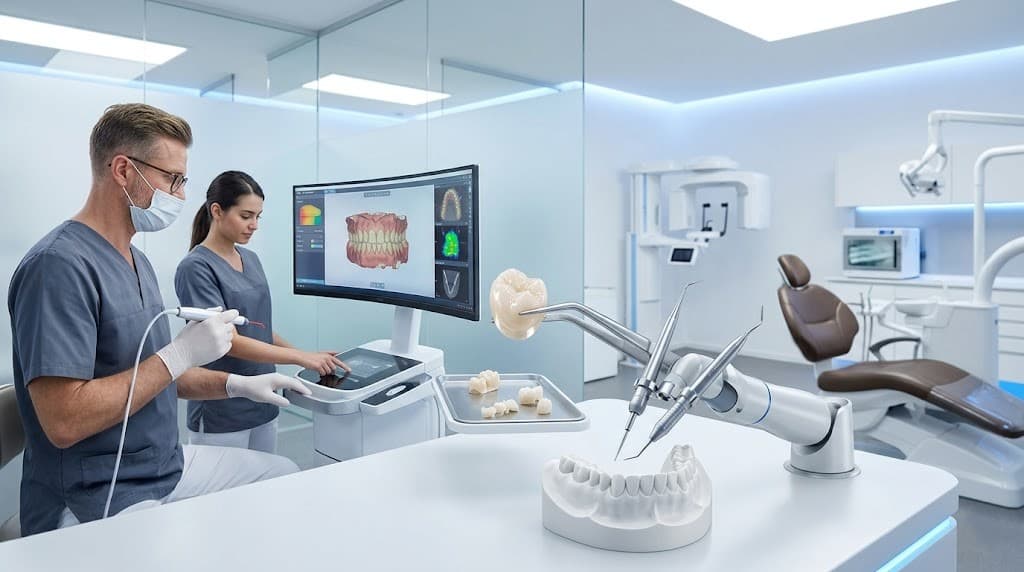
Today, advances in technology in the field of medicine are also leading significant changes in dentistry. Modern dentistry increasingly offers more effective and comfortable methods both for maintaining oral health and meeting aesthetic needs. Especially in the treatment of missing teeth, in addition to traditional bridges and dentures, innovative applications such as dental implants provide patients with more natural and long-lasting results.
What Is a Dental Implant and Who Can Receive It?
Dental implants are screw-shaped structures placed in the jawbone and are usually made of titanium. These implants allow for the fixation of artificial teeth that are very close to natural teeth in terms of function and appearance, in place of missing teeth. Since dental implants do not require intervention on neighboring teeth, they help preserve the surrounding dental tissues. This feature offers a significant advantage over traditional bridge treatments.
In Which Cases Can Implant Treatment Be Applied?
Dental implants can provide an effective solution in the following situations:
Single tooth loss: If there is sufficient bone in the jaw, a natural-looking and functional tooth can be placed in place of the lost tooth.
Multiple tooth loss or complete edentulism: It is possible to make fixed or removable dentures using multiple implants. Fixed dentures, as they are attached to implants, provide a natural tooth feeling and facilitate daily life.
Deformities in the jaw and facial region: Especially in some congenital or acquired jaw-facial defects, implant-supported applications can be beneficial for aesthetic and functional improvement.
Jawbone loss: If resorption has developed in the jawbone over time, a bone graft procedure may be required to strengthen the bone tissue before implant application.
Individuals who do not want to use removable dentures: Implant-supported fixed dentures can be preferred as an alternative to removable dentures and offer greater comfort.
How Is Dental Implant Treatment Performed?
Before starting implant treatment, a detailed oral and jaw examination and radiological evaluations are performed. The treatment is generally carried out with mild sedation, prioritizing the patient's comfort. On the titanium implants placed in appropriate areas in the mouth, a temporary abutment or temporary dental prosthesis is usually placed in the first stage.
There are two main methods in implant applications:
1. Single-stage method: A temporary abutment visible through the gum is attached immediately after the implant is placed.
2. Two-stage method: After the implant is placed, it is covered with gum tissue and allowed to heal; later, prosthetic abutments and permanent teeth are attached.
The healing process usually takes 3 months in the lower jaw and up to 6 months in the upper jaw. In some special cases, prosthetic teeth can be placed on the implant earlier. After the treatment is completed, patients can eat, speak, and smile freely with confidence.
Zirconium Implants and Crowns: Durability and Aesthetics Combined
Zirconium implants are new-generation implants frequently preferred by individuals with higher aesthetic expectations and especially those with narrow jawbones, compared to titanium implants. Zirconium material stands out in aesthetic applications due to its metal-free composition and natural appearance close to tooth whiteness. In addition, it does not leave a metallic taste in the mouth, does not cause discoloration over time, and is resistant to wear.
Zirconium is also used in dental crowns. Thanks to its ability to reflect natural light and its long-term durability, it is frequently preferred both aesthetically and functionally.
What You Need to Know About the Cost of Dental Implants
Dental implant prices may vary depending on the brand of the implant, the material used, the number of missing teeth, and the area where the procedure will be performed. In addition, since some implant materials are imported, they can affect the cost. Since each individual's oral and jaw structure is different, the most appropriate treatment method and price information can be obtained by consulting a dentist face-to-face.
Frequently Asked Questions
1. Is getting a dental implant painful?
Local anesthesia is applied during the treatment, and the patient's comfort is generally prioritized by providing mild sedation. There may be mild pain or sensitivity after the procedure, but this is usually controlled in a short time.
2. Can dental implants be done at any age?
As long as the general health condition is suitable, dental implants can be applied in adults whose bone development is complete. However, additional evaluations regarding bone density or health may be required in advanced age.
3. How long do implant teeth last?
With regular oral care and dental check-ups, dental implants can function for many years, even a lifetime, in most people.
4. What are the advantages of zirconium implants?
Zirconium implants stand out with their aesthetic appearance close to natural teeth, metal-free composition, and durability. They can be preferred especially by patients with aesthetic concerns.
5. What if the jawbone is not sufficient for implants?
In cases where the jawbone is insufficient, the bone quantity can be increased by a method called bone grafting, and then the implant can be applied.
6. How long is the healing period after the implant procedure?
It usually takes about 3 months in the lower jaw and 6 months in the upper jaw. However, this period may vary depending on the person's general health and the area of application.
7. Do dental implants cause allergies?
The risk of allergy to titanium and zirconium, which are commonly used in implants, is quite low. However, allergic reactions may rarely develop; in such a case, you should consult your dentist.
8. What factors affect the success of implant treatment?
General health status, oral hygiene, smoking, and regular dental check-ups play an important role in the success of the treatment.
9. Is special care required after implant treatment?
Yes, regular tooth brushing, use of dental floss, and dental check-ups are recommended for the longevity of implants. It is also beneficial to avoid hard foods and not to smoke.
10. Are implants rejected by the body as foreign objects?
Implant materials are designed to be compatible with the body. However, in rare cases, the body may react to the implant. In such a complication, it is necessary to consult a dentist.
11. Why do implant prices vary?
Prices may vary depending on many factors such as the material used, brand, the experience of the dentist, and the country and region where the procedure is performed. You can obtain accurate information from your dentist.
12. Which doctor should be consulted for dental implants?
Dental implant procedures are performed by dentists specialized in oral, dental and maxillofacial surgery or periodontology.
References
World Health Organization (WHO) – Oral Health Topics
American Dental Association (ADA) – Dental Implants
Journal of Dental Research – Dental Implant Complications
International Team for Implantology (ITI) – ITI Treatment Guide
Centers for Disease Control and Prevention (CDC) – Oral Health Basics