Breast Cancer: Current Knowledge, Diagnosis, Treatment, and the Importance of Early Detection

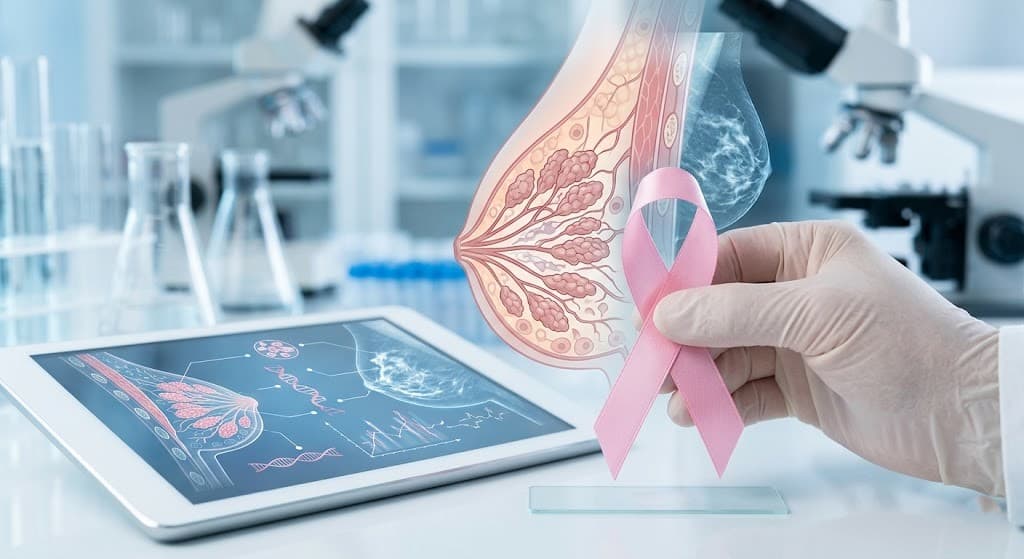
Breast cancer is one of the most common types of cancer among women worldwide and is an important public health issue. Although its incidence may vary across different countries and communities, according to current research, approximately one quarter of cancers detected in women are due to breast cancer. A significant portion of cancer-related deaths in women also result from this disease. However, with the development of modern diagnostic and treatment methods, promising results are being achieved in the fight against breast cancer. Especially thanks to early diagnosis, the chance of treatment and quality of life increase significantly.
What is Breast Cancer?
Breast cancer is a disease that occurs as a result of the uncontrolled proliferation of cells in the breast tissue. This abnormal growth usually begins in the milk ducts or lobules and may lead to the formation of a mass over time. These masses can often be felt during manual examination, which may allow breast cancer to be detected earlier than some other types of cancer. When detected at an early stage, the chance of effective treatment is quite high.
Common Symptoms Related to Breast Cancer
Breast cancer can sometimes progress for a long time without any symptoms. However, the following findings may appear at different stages of the disease:
Palpable Masses: The presence of painless, hard lumps in the breast or armpit area is one of the most common signs.
Nipple Discharge: Discharge that is usually unilateral, occurs spontaneously, and may sometimes be bloody should be carefully evaluated.
Change in Breast Shape or Size: The appearance of significant differences in size or shape between the two breasts is important.
Visible Skin Changes: Thickening, edema, redness, wound formation, or a "peau d’orange" appearance may develop on the breast skin.
Nipple Retraction or Inward Dimpling: Such changes may be observed especially if the tumor is close to the nipple or affects certain connective tissues.
If you notice any of these symptoms, consulting a healthcare professional is critical for early diagnosis.
Breast Self-Examination and Mammography for Early Diagnosis
Breast self-examination is an important practice that helps women notice changes in their breasts at an early stage. It is recommended to be performed on a specific day of each menstrual cycle or on the same day every month after menopause. During the examination, changes in the breast tissue, swellings, retractions, and color changes should be observed.
Mammography, on the other hand, is an imaging method that uses low-dose X-rays and is considered the gold standard in breast cancer screening. Experts generally recommend annual mammography starting at age 40 for women without any special risk factors. For women in risk groups, screening may be needed at an earlier age and at more frequent intervals upon a doctor's advice.
Staging and Course of Breast Cancer
Breast cancer is staged according to the size of the tumor, its spread to lymph nodes, and whether it has metastasized to other organs:
Early Stage (Stage 1): The tumor is smaller than 2 cm and there is no spread to lymph nodes.
Intermediate Stage (Stage 2): The tumor may be larger than 2 cm, and lymph node involvement may or may not be present.
Advanced Stage (Stage 3): The tumor is larger than 5 cm and there is significant spread to lymph nodes.
In more advanced stages, the cancer may also spread to different parts of the body.
Survival rates are quite high in breast cancer cases diagnosed and treated at an early stage. Therefore, screening and regular examinations are of great importance.
Breast Cancer Surgery and Treatment Methods
Surgical intervention is the most commonly used method in the treatment of breast cancer. Surgical options vary depending on the stage of the disease, the size of the tumor, and its spread:
Breast-Conserving Surgery: The tumor and surrounding tissues are removed, while the entire breast tissue is preserved. It is mostly performed in early stages.
Mastectomy: An operation in which the entire breast tissue is removed. It is preferred in advanced cases or when the tumor is widespread.
Oncoplastic Surgery: While removing the cancerous tissue, aesthetic concerns are also considered, and the shape of the breast is preserved as much as possible.
Sentinel Lymph Node Biopsy: The first lymph nodes to which the cancer spreads are identified with special dyes and removed.
Axillary Lymph Node Dissection: If there is cancer spread in the lymph nodes, these areas are surgically cleared.
All surgical procedures are performed under appropriate anesthesia for the patient and generally last between 1.5–2 hours. The patient's health status is an important factor affecting the scope of the surgery and the recovery process.
Risks and Possible Complications of Surgery
Like any surgical procedure, breast cancer surgery may involve certain risks, including the following:
Development of infection in the operated area
Bleeding and hematoma formation
Fluid accumulation at the surgical site (seroma)
Short- or long-term deformities
Depending on the characteristics of the tumor, the risk of the disease spreading to other areas
Complications may vary according to personal health status, age, and other accompanying medical problems. Close follow-up after the procedure and adherence to doctor’s recommendations play a key role in reducing risks.
Postoperative Considerations
Rest, regular wound care, and doctor check-ups are important after surgery. In addition, avoiding smoking and alcohol consumption, maintaining a balanced and healthy diet, and engaging in light daily exercise are recommended. If necessary, receiving psychological support can both facilitate the recovery process and improve the patient's quality of life.
The recovery period may vary depending on the patient's general health status, the surgical method performed, and any complications that develop. Patients are usually discharged within a few days, but full recovery may take several weeks.
Regular Examination and Screening Habits
Regular breast self-examination and mammography at recommended intervals are invaluable for the early detection of breast cancer. Especially those with a family history of breast cancer or risk factors should continue their check-ups at the frequency determined by their doctor.
It should be remembered that not every mass or change in the breast tissue necessarily indicates cancer, but if a change is noticed, medical evaluation should not be neglected. This way, treatment can be started early if necessary.
Frequently Asked Questions
1. What are the most prominent symptoms of breast cancer?
Painless lumps felt in the breast or armpit, nipple discharge, thickening or changes in the skin, nipple retraction, and changes in breast size are the most common symptoms.
2. How often should I perform breast self-examination?
It is recommended to perform it regularly every month, on a specific day of the menstrual cycle, or on a designated day each month after menopause.
3. At what age should mammography be started?
It is generally recommended once a year from the age of 40 for women without risk factors. For those with a family history of breast cancer or at risk, it may be started earlier upon a doctor’s recommendation.
4. When can I recover after surgery?
Most patients are discharged within a few days, but full recovery usually takes several weeks. The personal recovery period may vary depending on the scope of the procedure performed.
5. Is there a risk of cancer recurrence after breast cancer treatment?
There may be a risk of recurrence in some patients; therefore, regular doctor check-ups and adherence to recommended screening programs are necessary.
6. Are breast cancer surgeries dangerous?
As with any surgical procedure, there are some risks (the most
fection, bleeding, etc.) exist; however, with experienced teams and appropriate care, these risks can be minimized.7. What are alternative imaging methods to mammography?
Methods such as ultrasound and MRI can be used, especially in cases where clear images cannot be obtained with mammography. The most appropriate method will be determined by your doctor.
8. Can breast cancer be completely cured with early diagnosis?
The chance of recovery is quite high in patients who are diagnosed early and receive appropriate treatment. In advanced stages, treatment may be more complex, but new methods can increase both lifespan and quality of life.
9. Do nutrition and lifestyle affect the risk of breast cancer?
Balanced nutrition, regular exercise, and limiting smoking and alcohol can help reduce the risk, but do not provide absolute protection.
10. Is breast cancer seen only in women?
Breast cancer can also rarely occur in men; if men notice a mass or change in their breast tissue, they should consult a doctor.
11. Is nipple discharge always a sign of cancer?
Not every nipple discharge indicates cancer; there may also be hormonal or infection-related causes. However, especially bloody or unilateral discharges should be evaluated.
12. Is aesthetic surgery possible after breast surgery?
When deemed necessary, oncoplastic surgery or reconstruction (creation of a new breast) options can be considered.
13. What is colloidal lymph node biopsy and why is it performed?
With this procedure, the first lymph nodes to which the cancer has spread are identified and removed if necessary. Thus, the spread of the disease is determined and a treatment plan is made.
14. Should I be worried if my pathology result is delayed?
It may sometimes take time for pathology results to be available. When the results are ready, your doctor will provide you with detailed information about the process.
15. Is psychological support necessary after a breast cancer diagnosis?
Emotional difficulties may be experienced after diagnosis. Receiving support from specialists can facilitate the recovery and adaptation process.
References
World Health Organization (WHO): Breast cancer factsheet
American Cancer Society: Breast Cancer Overview
American College of Radiology (ACR): Mammography Guidelines
European Society for Medical Oncology (ESMO): Breast Cancer Clinical Practice Guidelines
CDC (Centers for Disease Control and Prevention): Breast Cancer Information