What Are the Early Signs of Pregnancy? Findings You Should Know and the Process You Should Follow


Pregnancy brings about various changes in the body, and these changes often manifest as different symptoms that can affect a person's daily life. In this article, you can find up-to-date information on signs that may be noticed in the early stages of pregnancy, expert recommendations, and management of the process.
Symptoms That May Appear in the Early Stages of Pregnancy
The most common signs of pregnancy include missed periods, nausea and vomiting, breast tenderness and fullness, fatigue, groin and lower back pain, sensitivity to odors, and stomach cramps. In addition to these physical changes that may occur during pregnancy, emotional fluctuations are also frequently experienced.
Some expectant mothers may notice one or more of the following symptoms in the first weeks. If you observe such signs, you can take a pregnancy test to confirm and plan your steps safely by consulting your obstetrician.
Common Findings in the Early Weeks of Pregnancy

Below are the symptoms that can be observed in the first weeks of pregnancy and their prevalence:
Missed period or changes in menstrual regularity
Nausea, including morning sickness, and occasional vomiting
Increased fatigue and need for sleep
Nausea that is more pronounced especially in the mornings
Fullness and tenderness in the breasts, and sometimes darkening of the nipples
Increase in vaginal discharge
Frequent urination
Mood swings
Mild cramps or pain in the abdominal and groin area
Measurable slight increase in body temperature, sometimes excessive sweating
Unusual metallic taste in the mouth
Feeling of bloating in the abdomen
Since most of the above findings may also be related to other medical conditions, it is recommended that those who suspect pregnancy take a home pregnancy test and then seek expert advice.
Points to Consider During Pregnancy Processes
The World Health Organization (WHO) recommends that pregnant women attend health check-ups eight times from the first week of pregnancy in order to detect and prevent possible complications early. Regular prenatal follow-up helps protect the health of both mother and baby before birth.
Many international health authorities and national guidelines advise those with concerns about pregnancy to closely monitor their symptoms and seek expert support when necessary.
When Do Pregnancy Symptoms Appear?
Symptoms specific to pregnancy usually begin to appear between the 4th and 6th weeks after fertilization. However, since each individual's physiology is different, some may feel changes in their bodies very early, while in others, symptoms may appear later.
In the early period, especially implantation bleeding (light spotting), which can occur about 6 to 12 days later, may be noticed by some expectant mothers. Similarly, fatigue, breast tenderness, sometimes mild nausea, and loss of appetite are also symptoms that can be observed throughout the process. Missed period is usually the most prominent sign indicating pregnancy.
Every woman's pregnancy process and the timing of symptoms are unique. Therefore, approaching the changes in your body consciously and seeking medical help when necessary ensures a healthier process.
Frequently Observed Symptoms in Pregnancy
The main symptoms commonly encountered during pregnancy are as follows:
Missed period
Nausea and vomiting (especially more pronounced in the mornings)
Persistent feeling of fatigue
Fullness and tenderness in the breasts (sometimes accompanied by darkening of the nipples)
Vaginal discharge that may increase in color and amount
Discomfort or pain in the lower back and groin area
Mild cramp-like pains in the stomach and abdomen
Sensitivity to certain odors
Mild spotting or implantation bleeding
Changes in appetite or cravings/aversion to certain foods
Mood swings, emotional sensitivity
If these symptoms seem familiar to you and you suspect the possibility of pregnancy, your situation can be clarified with a pregnancy test performed after a missed period. If your suspicious or unusual symptoms persist, it is strongly recommended that you consult a healthcare professional.
What Happens in the First Week of Pregnancy?
The “first week” of pregnancy usually technically refers to a period when fertilization has not yet occurred. Specialist physicians start the calculation of pregnancy weeks from the first day of the last menstrual period; during this time, hormonal changes prepare the uterus for possible fertilization. In the first week, distinct physical symptoms generally do not appear, but some may feel cramps or mild psychological changes due to hormones.
Other Findings That May Be Observed in Early Pregnancy
From the very first days of pregnancy, the body can give many different signals. The following early findings are frequently encountered:
Tenderness and fullness in the breasts
Mild vaginal bleeding or spotting
General fatigue and tendency to sleep
Increased sensitivity to odors
Mild cramps in the abdominal and groin area
Reasonable increase in body temperature
Nausea
It should be remembered that early symptoms may also be due to other causes, and a pregnancy test and doctor's examination are essential for a definitive diagnosis.
Pregnancy Periods: Trimesters and Their Characteristics
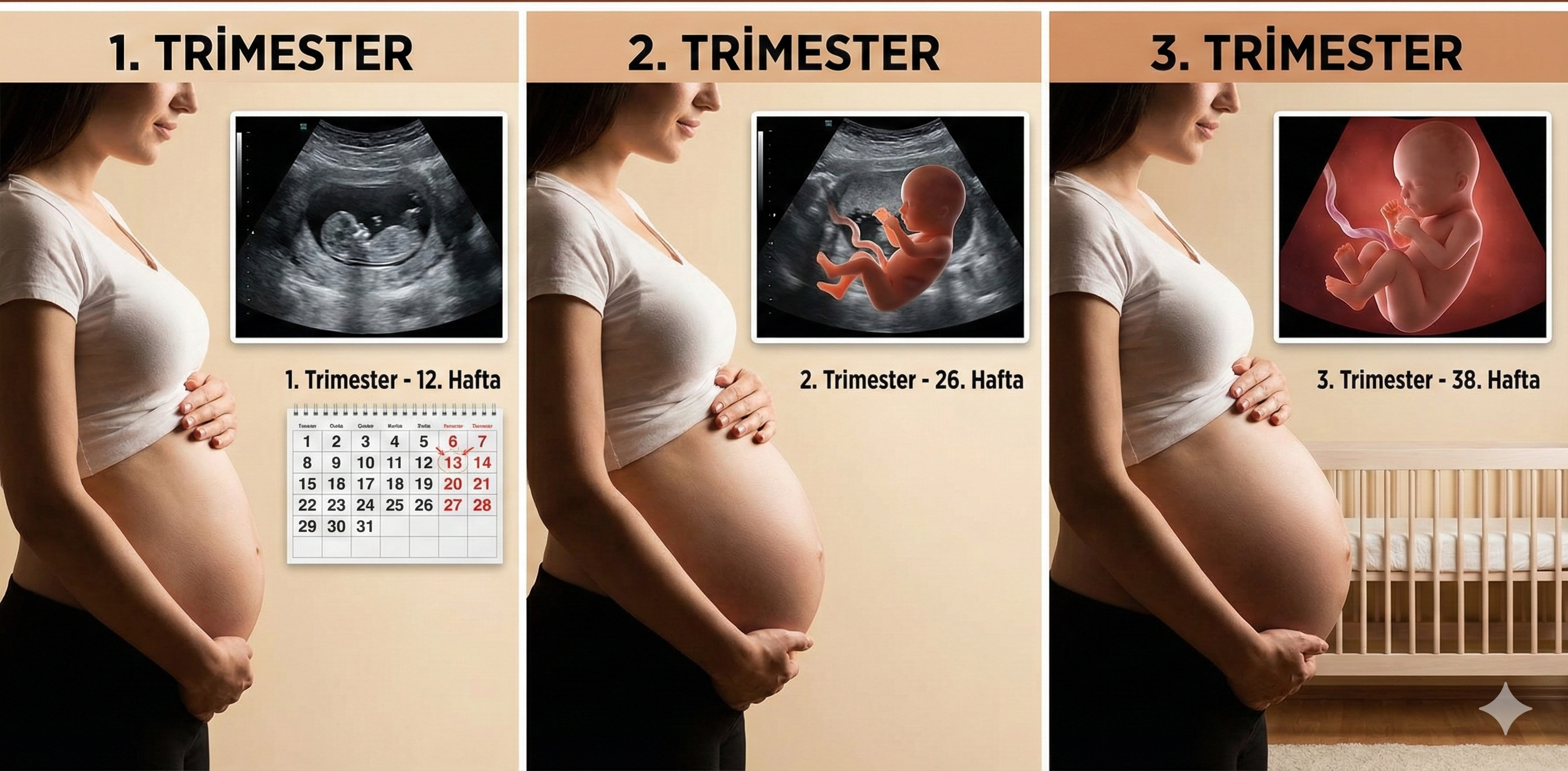
The pregnancy process is divided into three main periods (trimesters), and these periods reflect different stages of the baby's development:
1st Trimester (Weeks 0–13):
The baby's foundational organs, nervous system, and heart begin to form. During this period, expectant mothers may experience nausea, breast tenderness, sleepiness, and emotional changes depending on the weeks passed.
2nd Trimester (Weeks 14–26):
In many women, nausea decreases during this period, energy increases, and fetal movements begin to be felt. As the baby's organs mature, the musculoskeletal system develops and the mother's abdomen becomes more prominent.
3rd Trimester (Weeks 27–40):
The baby rapidly gains weight, and vital organs mature. The expectant mother may experience complaints such as back pain due to the growing uterus, insomnia, heartburn, and frequent urination. At this stage, preparation for birth comes to the fore.
Each trimester is a process that requires special monitoring and support for both the baby and the expectant mother. Although symptoms vary from person to person, regular check-ups ensure that this period is passed more safely.
Frequently Asked Questions
1. In which week do pregnancy symptoms start?
Pregnancy symptoms usually begin to appear between the 4th and 6th weeks after fertilization; however, some women may feel symptoms earlier or later.
2. Is there a definite way to detect pregnancy other than missed period?
The most reliable way is a pregnancy test performed at home or in a laboratory. Symptoms can vary, and a test is recommended for a definitive diagnosis.
3. Is mild spotting or bleeding during pregnancy normal?
Mild implantation bleeding that occurs after fertilization is normal in some women; however, if there is an increase in the amount or duration of bleeding, a doctor should definitely be consulted.
4. Are the initial signs of pregnancy the same for every woman?
No, every woman's body may respond differently and symptoms can vary from person to person.
5. Is morning sickness normal?
Yes, nausea and vomiting are often more pronounced in the mornings and are common in the early stages of pregnancy.
6. Can frequent urination indicate pregnancy?
Yes, the frequency of urination may increase due to the effect of the increased progesterone hormone, but this can also be seen for other reasons.
7. Are emotional fluctuations during pregnancy an expected condition?
Emotional fluctuations and mood changes are considered normal due to the effects of hormonal changes.
8. I am experiencing these symptoms even though I am not pregnant; what should I do?
These symptoms can also be seen in different medical conditions. If they persist, it would be beneficial to consult a gynecologist and obstetrician.
9. Is it correct to take a test in the first week of pregnancy?
Pregnancy tests generally provide more reliable results after a missed period. Tests taken too early may yield false negatives.
10. Which symptoms during pregnancy require emergency medical attention?
Severe or persistent abdominal pain, heavy bleeding, fever, or fainting are considered emergencies and a doctor should be consulted without delay.
11. What is the most definitive way to find out if I am pregnant?
Home urine tests or blood tests performed at healthcare facilities are among the most definitive methods.
12. My pregnancy test was negative despite the symptoms; what should I do?
You can repeat the test after a few days or consult a healthcare professional if the symptoms persist.
13. How can I accurately calculate pregnancy weeks?
Pregnancy weeks are usually calculated from the first day of the last menstrual period.
14. Are symptoms felt with the same intensity in every pregnancy?
No, the intensity and duration of symptoms may vary depending on the individual and the pregnancy.
15. When should you consult a doctor if pregnancy is suspected?
If you are experiencing symptoms and are unsure, or if the pregnancy test is positive, it is recommended to seek support from an obstetrician.
References
World Health Organization (WHO), "Antenatal Care Recommendations"
Centers for Disease Control and Prevention (CDC), "Pregnancy: The First Trimester"
American College of Obstetricians and Gynecologists (ACOG), "Early Pregnancy Symptoms"
European Board and College of Obstetrics and Gynaecology (EBCOG) Guidelines
BMJ, "Early pregnancy symptoms and the timing of symptom onset: a prospective study"