What is Pulse? Its Importance in Our Body and Normal Ranges

What is Pulse? Its Importance in Our Body and Normal Ranges
Pulse refers to the pressure waves felt on the walls of the arteries as a result of the forceful transmission of blood into the vessels with each contraction of the heart. It can usually be easily felt by hand in areas of the body close to the surface, such as the wrist, neck, or groin. Pulse not only provides information about the frequency of heartbeats; it also offers significant clues about the heart's rhythm, the state of the circulatory system, and general health.
Having a heart rate within the normal range is one of the indicators of a healthy cardiovascular system. Resting pulse may vary from person to person. Many factors such as age, gender, physical activity level, stress, body temperature, medications used, and health status affect the evaluation of pulse. However, the basic rule is that the pulse should be regular and rhythmic.
What Are the Normal Pulse Ranges?
In healthy adults, the resting heart rate should generally be between 60 and 100 beats per minute. In individuals who have been exercising regularly for a long time, this value may drop to lower levels (approximately 45–60 beats/minute). A low resting pulse, especially in athletes, indicates that the heart is working more efficiently and is generally considered a positive finding.
A heart rate between 50–70 beats per minute is generally considered very good, 70–85 is considered normal, while values above 85 are evaluated as high pulse. A high or low pulse does not always necessarily indicate a health problem; it often develops as a response to physiological changes in the body. However, if there are persistent abnormalities accompanied by complaints such as fatigue, dizziness, or fainting, a healthcare professional should definitely be consulted.
Why Can Pulse Change?
Pulse is affected by many environmental and physiological factors. Fever, activity level, stress, anxiety, or emotional states such as excitement can cause temporary increases in pulse. Smoking, certain medications, and anemia can also lead to an increase in pulse. After quitting smoking, a decrease in pulse values is usually observed.
In addition, heart diseases, thyroid gland disorders, infections, bleeding, or certain endocrine disorders can cause permanent changes in pulse. Taking all these factors into account, it is important to check the pulse from time to time; especially if there are new, different, or serious symptoms, a doctor should be consulted.
How Is Pulse Measured?
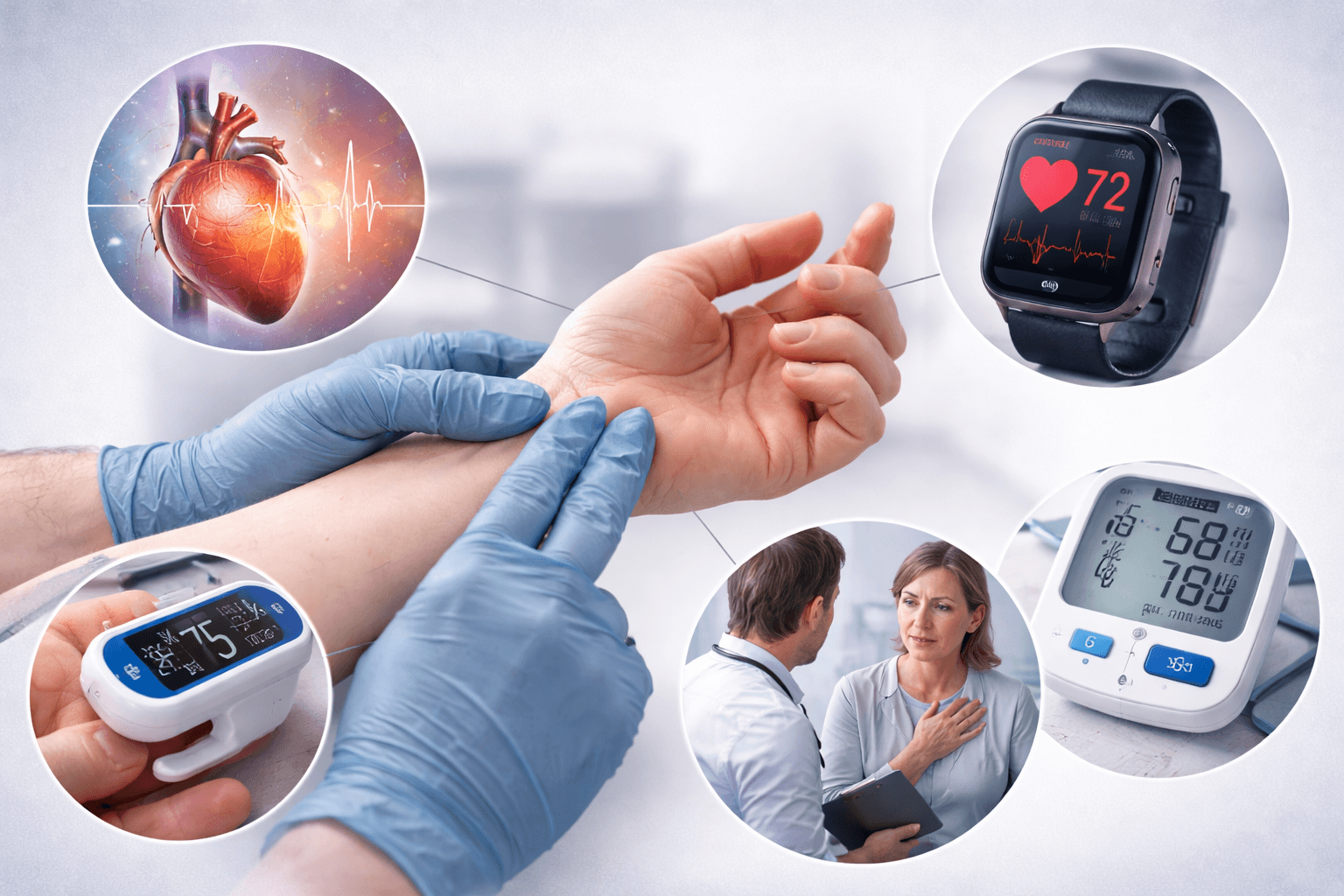
Measuring pulse is a very simple and practical procedure. To perform this measurement, you should first be rested and calm. During the measurement, gently press your index and middle fingers on the point where the artery passes at the wrist, neck, or groin to feel the beats. Then, with the help of a stopwatch, count how many times it beats in 60 seconds. If you are short on time, you can roughly find your pulse per minute by multiplying the number of beats in 30 seconds by two.
The pulse should be regular, full, and rhythmic. If you feel irregularity (arrhythmia), extra beats, or very slow/very fast beats in your heart rate, do not hesitate to seek further evaluation at a healthcare facility. Especially in individuals diagnosed with rhythm disorders, direct auscultation of the heart may be required upon doctor's recommendation. Modern electronic blood pressure monitors are also widely used for practical pulse measurement.
Main Causes of High Pulse
High pulse means that the heart beats faster than normal per minute. Temporary factors that increase pulse include intense physical activity, strenuous exercise, excessive stress, excitement, fear, and sudden emotional changes. In addition, febrile infections, overactive thyroid gland, and some cardiovascular diseases can also lead to an increase in pulse.
In serious situations such as bleeding, the heart starts to beat faster so that body tissues can receive enough oxygen. However, when blood volume is severely reduced, low pulse may also develop, which is a condition requiring emergency intervention. In individuals with persistently high pulse, it is recommended to investigate underlying heart diseases or other medical conditions. It is known that regular exercise lowers resting pulse over time.
What Are the Causes of Low Pulse?
Low pulse, known as bradycardia, is when the number of heartbeats per minute is below the expected range according to age and health status. In hearts strengthened by strenuous exercise, a low pulse is generally normal and not a cause for concern. However, a pulse below 40, especially if accompanied by complaints such as fatigue, dizziness, or fainting, requires urgent medical evaluation.
Causes of low pulse include old age, certain heart rhythm disorders, congenital heart conditions, brain hemorrhage, thyroid hormone deficiencies, sleep apnea, electrolyte imbalances, or side effects of some medications.
What Should Pulse Be in Different Age Groups?
Pulse varies according to age and the person's general health status. In children and infants, pulse is higher than in adults; as age increases, it becomes lower. The age-based pulse ranges used worldwide are summarized in the table below:
Newborns: 70–190 beats/minute (average ~125)
1–11 months: 80–160 beats/minute (average ~120)
1–2 years: 80–130 beats/minute (average ~110)
2–4 years: 80–120 beats/minute (average ~100)
4–6 years: 75–115 beats/minute (average ~100)
6–10 years: 70–110 beats/minute (average ~90)
10–18 years: 55–105 beats/minute (average ~80–90)
Adults aged 18 and over: 60–100 beats/minute (average ~80)
Heart rates that are far outside these ranges, especially if accompanied by complaints, should be evaluated by a physician.
What Can Be Done to Keep Pulse Healthy?
Regular exercise, balanced nutrition, avoiding stress as much as possible, and quitting smoking and alcohol help keep the pulse within normal ranges. Regular monitoring of blood pressure, cholesterol, and blood sugar is also important for maintaining heart health. If you experience new or recurrent palpitations, dizziness, or fatigue, consult a healthcare professional without delay.
Frequently Asked Questions (F.A.Q.)
What pulse rate is considered normal?
In healthy adults, the resting pulse is usually between 60–100 per minute. In people who exercise regularly, this value may be lower.
How can I measure my pulse correctly?
While resting, you can feel your pulse by gently pressing your index and middle fingers on the artery at the wrist or neck. Counting the number of beats for 60 seconds is the most accurate method.
Is an increase in pulse dangerous?
Temporary increases in pulse are mostly harmless. However, if your pulse is persistently high at rest and other complaints also appear, you should consult a doctor.
When is low pulse important?
Especially if the pulse drops below 40 and there are complaints such as dizziness, fatigue, or fainting, urgent evaluation is required.
Why is pulse faster in children than in adults?
Due to children's metabolism and body structure, their heart rates are higher. As age increases, pulse slows down.
Does stress affect pulse?
Yes. Stress and changes in emotional state can temporarily increase heart rate.
Does smoking increase pulse?
Smoking and other nicotine products temporarily increase pulse. After quitting smoking, a decrease in your pulse level is observed.
Why do athletes have lower pulse?
Regular exercise allows the heart to work more efficiently; thus, the heart pumps more blood with fewer beats and resting pulse may decrease.
Why does pulse increase with high fever?
As body temperature rises, metabolism accelerates and the heart has to work harder. This leads to an increase in pulse.
Heart rate
I feel a sense of irregularity in my pulse, what should I do?If you feel an irregular pulse or arrhythmia, you should definitely consult a cardiology specialist.
Does being overweight affect the pulse?
Obesity puts additional strain on the heart and may cause an increase or irregularity in the pulse.
What should I do if my pulse suddenly rises?
Short-term increases in pulse are generally harmless. However, if they occur frequently and are accompanied by other symptoms, you should consult a healthcare facility.
Should I monitor my pulse at home?
Especially if you have cardiovascular disease or risk factors, regular pulse monitoring at home may be beneficial for early diagnosis and management.
References
World Health Organization (WHO): https://www.who.int
American Heart Association (AHA): https://www.heart.org
Centers for Disease Control and Prevention (CDC): https://www.cdc.gov
European Society of Cardiology (ESC) Guidelines
Mayo Clinic. "Pulse: What’s normal?" https://www.mayoclinic.org
UpToDate. "Evaluation of the adult with palpitations"