What Is Colon (Intestinal) Cancer? What Are Its Symptoms? What Causes It?

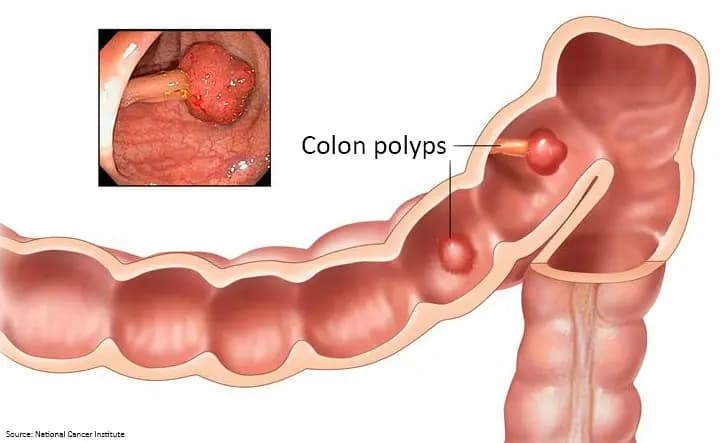
Colon (Intestinal) Cancer: Symptoms, Causes, Diagnosis, and Treatment Approaches
Colon cancer is a serious disease that develops in the large intestine and rectum, affecting a critical part of the digestive system. It usually arises from polyps that form on the intestinal surface and gradually transform into cancer. The symptoms, causes, and treatment of the disease may vary depending on the stage of the cancer and the general health status of the patient. As with all types of cancer, early diagnosis provides a significant advantage in the fight against colon cancer.
What is Colon (Intestinal) Cancer?
Colon cancer occurs in the large intestine and is one of the most common types of cancer worldwide. This disease is mostly seen in individuals over the age of 50, but it can occur at any age. To mention the structure of the large intestine, it is approximately 1.5–2 meters long and consists of two main parts: the colon and the rectum. The rectum is the last part of the large intestine closest to the anus and is where stool is stored before being expelled from the body. The colon refers to the wide section of the intestine before the rectum. After nutrients pass from the small intestine to the colon, water and minerals are absorbed here and waste is stored in the rectum.
Colon cancer begins in the cells of the mucosal layer lining the inner surface of the large intestine.
Anatomy of the Colon
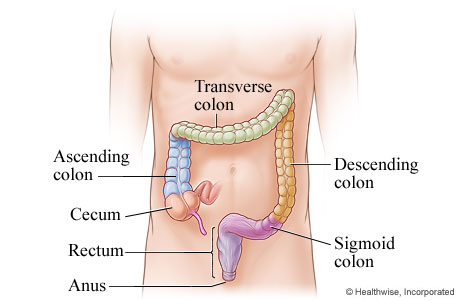
Cancer is most commonly seen in the following regions;
Sigmoid colon (the S-shaped last part) : This is the part of the large intestine that connects to the rectum. It is the most common region. Here, since the stool becomes more solid, the cells are exposed to waste for a longer period, which increases the risk factor.
Rectum : This is the part of the colon closest to the anus. Cancer that develops in this region is called rectal cancer, but it is generally referred to together under the heading “colorectal cancer.”
Ascending (right) colon: This is the first region where liquid waste from the small intestine arrives. Tumors that develop in this region usually show late symptoms because the stool is still in liquid form. Therefore, right colon cancers are often detected at a late stage.
Transverse colon : This is the horizontal section connecting the right and left colon. Cancer can also develop here, but it is less common compared to other regions.
Descending (left) colon: This is the section where waste moves toward the anus. Tumors here usually present with early symptoms such as constipation, thinning of the stool, bleeding.
Approximately 40–50% of cases occur in the sigmoid colon and rectum, about 20% in the ascending (right) colon, and the remainder in the transverse and descending (left) colon sections.
What is Colorectal Cancer?
Colorectal cancer encompasses cancers that develop in both the colon and rectum. It occurs in the lower part of the digestive system as a result of abnormal cell proliferation. It usually develops when benign polyps gradually turn into cancer. The chance of treatment increases significantly when colorectal cancer is detected at an early stage.
What are the Symptoms of Colon Cancer?
Colon cancer often does not cause noticeable complaints in the early stages. Symptoms usually appear as the tumor grows and can be summarized as follows:
Abdominal pain or cramps
Prolonged diarrhea, constipation, or changes in stool shape
Blood in the stool or dark (tarry) stools
Unexplained weight loss
Persistent fatigue and weakness
Feeling of bloating or fullness in the abdomen
These complaints may also be symptoms of other health problems. Therefore, it is important to consult a healthcare professional, especially for persistent or unexplained issues.
Causes and Risk Factors of Colon Cancer
Although the exact cause of colon cancer is not fully known, various risk factors have been identified:
Age: The risk increases in people over the age of 50.
Family history: The risk is higher in those with first-degree relatives who have colon cancer; in this case, it is recommended to start screening tests earlier.
Polyps: Polyps that form on the intestinal wall can turn into cancer over time, so it is important to detect and treat them.
Genetic disorders: Especially hereditary syndromes such as Lynch syndrome (HNPCC) can increase the risk.
Inflammatory bowel diseases: Chronic intestinal diseases such as Crohn's disease and ulcerative colitis increase the risk.
Lifestyle: A low-fiber, high-fat diet, excessive weight (obesity), physical inactivity, smoking, and excessive alcohol consumption increase the risk.
Certain health conditions: Type 2 diabetes also increases the risk of colon cancer.
How is Colon Cancer Diagnosed?
Today, endoscopic methods are at the forefront in the diagnosis of colon and rectal tumors. With colonoscopy, which is the standard method, it is possible to directly visualize the inner surface of the intestine and remove suspicious polyps. For a definitive diagnosis, a biopsy (taking a sample from suspicious tissue for pathological examination) is performed. Imaging methods such as computed tomography (CT) can also be used to assess the risk of enlarged tumors or metastasis. The fecal occult blood test is also a frequently used screening test.
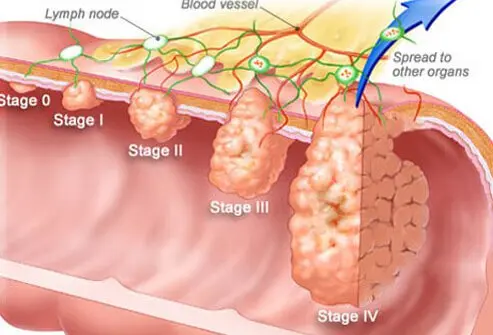
Stages of Colon Cancer and Symptoms by Stage
Stage 0 (Carcinoma in situ): The cancer is still limited to the inner surface of the intestine. Usually, no symptoms are seen.
Stage 1: The cancer is located in the inner layers of the intestinal wall. There may be mild abdominal pain, changes in bowel habits, or a small amount of blood in the stool.
Stage 2: The tumor may extend beyond the intestinal wall but has not spread to the lymph nodes. Abdominal pain, significant changes in bowel habits, weight loss, and bloating may occur.
Stage 3: The cancer has spread to nearby lymph nodes. Abdominal pain, weakness, loss of appetite, and blood in the stool are more pronounced.
Stage 4: The cancer has spread to distant organs such as the liver or lungs (metastasis). Severe fatigue, persistent abdominal pain, intestinal obstruction, and rapid weight loss may be seen.
What Causes Colon Cancer?
The development process of colon cancer usually occurs when benign polyps gradually turn into cancer. Genetic changes in the cells play a role; however, environmental and lifestyle factors are also important. Although a specific cause cannot be indicated, avoiding risk factors and participating in screening programs can be protective.
How Long Does It Take for Colon Cancer to Develop?
Colon cancer usually develops slowly, over a period of years. The transformation from a polyp to cancer can take an average of 10–15 years. Therefore, regular screenings are of vital importance, especially for high-risk groups.
Types of Colon Cancer
The vast majority of colon cancers are adenocarcinomas; these tumors originate from the glandular cells lining the inner surface of the intestine. Less commonly, other types such as lymphoma, sarcoma, carcinoid, or gastrointestinal stromal tumor (GIST) may also be encountered. Diagnostic and treatment approaches may vary for different tumor types.
Treatment Methods for Colon Cancer
Treatment is planned individually according to the stage of the disease, the general condition of the patient, and the characteristics of the tumor. In the early stage, surgical treatment is often sufficient; the aim is to remove polyps and cancerous tissue. In advanced cases, chemotherapy, sometimes radiotherapy and
nowadays, targeted or immunotherapy options may also be added for some patients. Follow-up and treatment should be managed by a specialized team.Colon Cancer Surgery
Surgery is the main approach in the treatment of colon cancer. The procedure performed varies according to the location and spread of the tumor; in early stages, only the polyp may be removed, while in more advanced cases, partial colectomy (removal of a section of the colon along with nearby lymph nodes) may be performed. The extent of surgery and the patient's recovery process depend on the stage of the disease and individual factors.
Possible Risks of Colon Cancer Surgery
As with any surgical procedure, colon cancer surgeries may have certain risks and complications. These include bleeding, organ injury (for example, urinary tract, bladder, spleen, liver, pancreas, or intestine), leakage at the intestinal sutures, infection at the surgical site, and nerve damage. These risks are minimized through pre- and post-operative patient monitoring.
Postoperative Considerations
In the postoperative period, the patient may experience mild to moderate pain, and occasionally infection or bleeding may occur. Medications recommended by the doctor are used for pain, and antibiotics may be given to reduce the risk of infection. Supporting blood circulation through movement (such as early mobilization and exercises) and adequate fluid intake are important in preventing complications. The doctor's recommendations should be followed, and attention should be paid to nutritional advice during the recovery process.
Recovery Process and Length of Hospital Stay
After colon cancer surgery, an average hospital stay of 5–10 days may be required. Even after discharge, recovery may take one or two months. During this period, adhering to dietary recommendations, taking medications regularly, and not missing follow-up appointments are important for a healthy recovery process.
What Can Be Done to Prevent Colon Cancer?
A diet rich in fiber and balanced, adequate intake of calcium and vitamin D, maintaining a healthy weight, regular physical activity, and avoiding smoking and excessive alcohol consumption are important protective factors. Especially after the age of 50, routine screening tests enable early detection of the disease and improve health outcomes.
Who Is at Risk for Colon Cancer?
Worldwide, colon cancer is more frequently detected in individuals over the age of 50. Individuals with a family history of colorectal cancer are advised to undergo regular screening from a younger age. Various studies have indicated that a low-fiber and high-protein diet, vitamin D deficiency, and health problems such as diabetes also increase the risk.
Where is the pain of colon cancer usually felt?
It may be felt in the lower or lateral parts of the abdomen, and sometimes as more widespread abdominal pain.
Is a positive stool test an indication of colon cancer?
A positive fecal occult blood test may indicate bleeding in the intestines, including colon cancer. Further investigation is required for a definitive diagnosis.
Can colon cancer be detected by ultrasound?
Ultrasound is generally insufficient for the direct detection of intra-intestinal cancers. Methods such as colonoscopy and CT are more effective in diagnosis.
Is colon cancer surgery risky?
As with any surgical procedure, there are certain risks, but these can be reduced with an experienced team and appropriate follow-up.
Which department should be consulted for colon (intestinal) cancer?
General surgery and/or gastroenterology departments are the specialties to consult for diagnosis and treatment.
How long does colon cancer surgery take?
Although it varies depending on the location and spread of the cancer, it usually takes between 2–3 hours on average.
Can colon cancer be treated with medication?
In advanced stages, drug treatments such as chemotherapy may be applied. However, in early stages, the main form of treatment is surgery.
Is colon cancer genetic?
Individuals with a family history of colon cancer have a higher risk due to genetic predisposition, but not all cases are genetic.
Does colon cancer recur?
Regular follow-up after treatment is important. In some cases, the disease may recur, so it is necessary to follow the doctor's recommendations.
Are colon cancer and rectal cancer the same thing?
Although colon and rectal cancers share similar features, treatment and approach may differ depending on their location. Both are collectively referred to as "colorectal cancer"
References
World Health Organization (WHO) – Colorectal Cancer Information Page
https://www.who.int/news-room/fact-sheets/detail/colorectal-cancer
American Cancer Society – Colorectal Cancer Guidelines
European Society for Medical Oncology (ESMO) – Colorectal Cancer Clinical Practice Guidelines
US Centers for Disease Control and Prevention (CDC) – Colorectal Cancer Information
The Lancet, New England Journal of Medicine – Current Research on Colorectal Cancer
We have come to the end of our article. Perhaps you or a loved one may be facing this disease.
The universe, just as it contains good and evil; beauty and ugliness; Leyla and Mecnun, also contains both illness and healing.
May what you encounter be the next stop on your journey—the stop of healing.
Knowledge is power. Every step you take with knowledge in any illness will be the most beautiful path to hope.
I wish you and your loved ones healthy and healing lives…