What Is Colon (Intestinal) Cancer? What Are Its Symptoms? What Causes It?

Colon (Intestine) Cancer: Symptoms, Causes, Diagnosis and Treatment Approaches
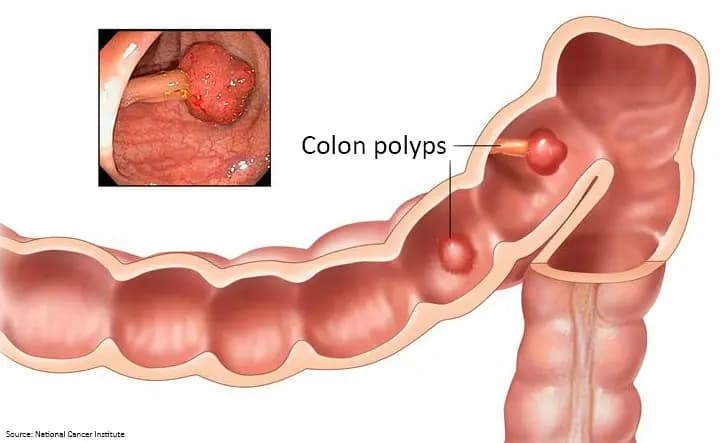
Colon cancer is a serious disease that develops in the large intestine and rectum, affecting a crucial part of the digestive system. It usually arises when polyps that form on the intestinal surface gradually turn into cancer. The symptoms, causes, and treatment of the disease may vary depending on the stage of the cancer and the general health status of the patient. As with all types of cancer, early diagnosis provides a significant advantage in the fight against colon cancer.
What is Colon (Intestine) Cancer?
Colon cancer occurs in the large intestine and is one of the most common types of cancer worldwide. This disease is mostly seen in individuals over the age of 50, but it can occur at any age. If we talk about the structure of the large intestine, it is about 1.5–2 meters long and consists of two main parts: the colon and the rectum. The rectum is the last part of the large intestine closest to the anus and is where stool is stored before being expelled from the body. The colon refers to the wide intestinal section before the rectum. After nutrients pass from the small intestine to the colon, water and minerals are absorbed here, and wastes are stored in the rectum.
Colon cancer begins in the cells of the mucosal layer lining the inner surface of the large intestine.
Anatomy of the colon
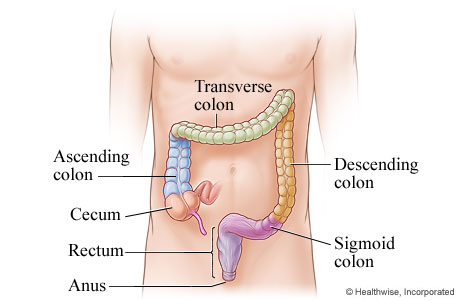
Cancer is most commonly seen in the following regions;
Sigmoid colon (the S-shaped last part) : This is the part of the large intestine that connects to the rectum. It is the most common region. Since the stool becomes more solid here, cells are exposed to waste for a longer time, which increases the risk factor.
Rectum : This is the part of the colon closest to the anus. Cancer that develops in this region is called rectal cancer, but it is generally referred to together under the heading “colorectal cancer.”
Ascending (right) colon: This is the first region where liquid waste from the small intestine arrives. Tumors that develop in this region usually show late symptoms because the stool is still in liquid form. Therefore, right colon cancers are often detected at a late stage.
Transverse colon : This is the horizontal part connecting the right and left colon. Cancer can also occur here, but it is less common than in other regions.
Descending (left) colon: This is the part where waste moves toward the anus. Tumors here can usually present with early symptoms such as constipation, thinning of the stool, bleeding.
Approximately 40–50% of cases occur in the sigmoid colon and rectum, about 20% in the ascending (right) colon, and the remainder in the transverse and descending (left) colon sections.
What is Colorectal Cancer?
Colorectal cancer includes cancers that develop in both the colon and rectum. It occurs in the lower part of the digestive system as a result of abnormal cell proliferation. It usually develops when benign polyps gradually turn into cancer. The chance of treatment increases significantly if colorectal cancer is detected at an early stage.
What are the Symptoms of Colon Cancer?
Colon cancer often does not cause noticeable complaints in the early period. Symptoms usually appear as the tumor grows and can be summarized as follows:
Abdominal pain or cramps
Long-term diarrhea, constipation, or changes in stool shape
Blood in the stool or dark (tarry) stool
Unexplained weight loss
Persistent fatigue and weakness
Feeling of bloating or fullness in the abdomen
These complaints may also be signs of other health problems. Therefore, it is important to consult a healthcare professional, especially for persistent or unexplained problems.
Causes and Risk Factors of Colon Cancer
Although the exact cause of colon cancer is not fully known, various risk factors have been identified:
Age: The risk increases in people over the age of 50.
Family history: The risk is higher in those with first-degree relatives who have colon cancer; in this case, it is recommended to start screening tests earlier.
Polyps: Polyps that form in the intestinal wall can turn into cancer over time, so it is important to detect and treat them.
Genetic disorders: Especially hereditary syndromes such as Lynch syndrome (HNPCC) can increase the risk.
Inflammatory bowel diseases: Chronic bowel diseases such as Crohn's disease and ulcerative colitis increase the risk.
Lifestyle: Low-fiber, high-fat diet, excessive weight (obesity), physical inactivity, smoking, and excessive alcohol consumption increase the risk.
Certain health conditions: Type 2 diabetes also increases the risk of colon cancer.
How is Colon Cancer Diagnosed?
Today, endoscopic methods are at the forefront in the diagnosis of colon and rectal tumors. With colonoscopy, which is the standard method, it is possible to directly visualize the inner surface of the intestine and remove suspicious polyps. For a definitive diagnosis, a biopsy (taking a sample from suspicious tissue for pathological examination) is performed. Imaging methods such as computed tomography (CT) can also be used to assess the risk of enlarged tumors or metastasis. The fecal occult blood test is a frequently used test for screening purposes.
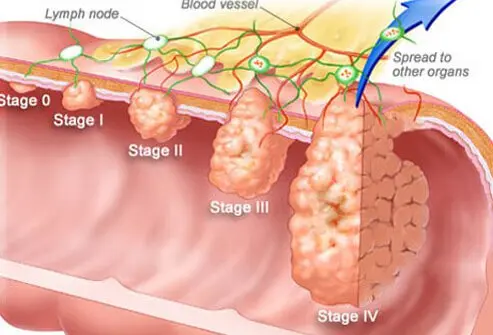
Stages of Colon Cancer and Symptoms by Stage
Stage 0 (Carcinoma in situ): The cancer is still limited to the inner surface of the intestine. Usually, no symptoms are seen.
Stage 1: The cancer is located in the inner layers of the intestinal wall. There may be mild abdominal pain, changes in bowel habits, or a small amount of blood in the stool.
Stage 2: The tumor may extend beyond the intestinal wall but has not spread to lymph nodes. Abdominal pain, significant changes in bowel habits, weight loss, and bloating may occur.
Stage 3: The cancer has spread to nearby lymph nodes. Abdominal pain, weakness, loss of appetite, and more pronounced blood in the stool are observed.
Stage 4: The cancer has spread to distant organs such as the liver or lungs (metastasis). Severe fatigue, persistent abdominal pain, intestinal obstruction, and rapid weight loss may be seen.
Why Does Colon Cancer Occur?
The development process of colon cancer usually occurs when benign polyps gradually turn into cancer. Genetic changes in cells play a role; however, environmental and lifestyle factors are also important. Although a specific cause cannot be indicated, avoiding risk factors and participating in screening programs can be protective.
How Long Does It Take for Colon Cancer to Develop?
Colon cancer usually develops slowly, over a period of years. The transformation from a polyp to cancer takes an average of 10–15 years. Therefore, regular screenings are vital, especially for high-risk groups.
Types of Colon Cancer
The vast majority of colon cancers are adenocarcinomas; these tumors originate from glandular cells lining the inner surface of the intestine. Less commonly, other types such as lymphoma, sarcoma, carcinoid, or gastrointestinal stromal tumor (GIST) may also be encountered. Diagnostic and treatment approaches may vary for different tumor types.
Treatment Methods for Colon Cancer
Treatment is planned individually according to the stage of the disease, the general condition of the patient, and the characteristics of the tumor. In the early stage, surgical treatment is often sufficient; the aim is to remove polyps and cancerous tissue. In advanced cases, chemotherapy, sometimes radiotherapy, and nowadays targeted or immunotherapy options for some patients may be added. Follow-up and treatment should be managed by a specialized team.
Colon Cancer Surgery
Surgery is the main approach in the treatment of colon cancer. The procedure performed varies according to the location and spread of the tumor; in early stages, only the polyp may be removed, while in more advanced cases, partial colectomy (removal of a section of the colon along with nearby lymph nodes) may be performed. The extent of surgery and the patient's recovery process depend on the stage of the disease and individual factors.
Possible Risks of Colon Cancer Surgery
Joalo ka ts'ebetsong efe kapa efe ea ho buoa, ho buoa kankere ea mala ho ka ba le likotsi le mathata a itseng. Har'a tsena ho ka ba le ho tsoa mali, ho lemala ha litho tsa 'mele (mohlala, litsela tsa moroto, senya, spleen, sebete, pancreas kapa mala), ho petsoha ha likhoele tsa mala, tšoaetso sebakeng sa opereishene le tšenyo ea methapo. Likotsi tsena li lekoa ho fokotsoa ka tlhokomelo ea mokuli pele le ka mor'a opereishene.
Lintho Tse Lokelang ho Hlokomeloa Ka Mor'a Opereishene
Ka mor'a opereishene, mokuli a ka ba le bohloko bo bobebe ho isa bo mahareng, ka linako tse ling ho ka hlaha tšoaetso kapa ho tsoa mali. Meriana e khothalletsoang ke ngaka e sebelisoa bakeng sa bohloko, 'me li-antibiotic li ka fuoa ho thibela kotsi ea tšoaetso. Ho ts'ehetsa phallo ea mali ka ho sisinyeha (mohlala, ho sisinyeha kapele le boikoetliso) le ho noa metsi a lekaneng ho bohlokoa ho thibela mathata. Ho lokela ho latela likeletso tsa ngaka le ho ela hloko likeletso tsa phepo nakong ea ho fola.
Nako ea Ho Fola le Nako ea ho Lula Sepetlele
Ka mor'a opereishene ea kankere ea mala, ho ka hlokahala hore mokuli a lule sepetlele matsatsi a ka bang 5–10. Le ka mor'a ho tsoa sepetlele, ho fola ho ka nka khoeli kapa tse peli. Nakong ena, ho latela likeletso tsa phepo, ho sebelisa meriana ka mokhoa o hlophisitsoeng le ho se fose likopano tsa taolo ho bohlokoa bakeng sa ts'ebetso e phetseng hantle.
Ke Eng e ka Etsang Hore U Itšireletse ho Kankere ea Mala?
Lijo tse nang le fiber e ngata le phepo e leka-lekaneng, ho noa calcium le vithamine D e lekaneng, ho boloka boima bo botle ba 'mele, ho ikoetlisa khafetsa, le ho qoba ho tsuba le ho noa joala ka bongata ke lintlha tsa bohlokoa tsa thibelo. Haholo-holo ka mor'a lilemo tse 50, ho etsa liteko tsa tlhahlobo khafetsa ho thusa ho fumana lefu kapele le ho ntlafatsa liphetho tsa bophelo.
Ke Bo-mang ba Leng Kotsing ea Kankere ea Mala?
Hohle lefatšeng, kankere ea mala e fumanoa hangata ho batho ba fetang lilemo tse 50. Batho ba nang le nalane ea kankere ea kolorektale malapeng ba eletsoa ho etsa tlhahlobo khafetsa ho tloha lilemong tse nyane. Lijo tse nang le fiber e tlase le protheine e phahameng, khaello ea vithamine D le mathata a bophelo a kang lefu la tsoekere le tsona li bontšitsoe ho eketsa kotsi liphuputsong tse fapaneng.
Bohloko ba kankere ea mala hangata bo utluoa kae?
Bo ka utluoa karolong e ka tlaase kapa lehlakoreng la mpa, kapa ka linako tse ling e le bohloko bo akaretsang ba mpa.
Na teko ea mantle e nang le sephetho se setle ke pontšo ea kankere ea mala?
Sephetho se setle sa teko ea mali a patiloeng mantle se ka bontša ho tsoa mali mala, ho kenyeletsa le kankere ea mala. Ho hlokahala lipatlisiso tse tsoetseng pele bakeng sa netefatso e tobileng.
Na kankere ea mala e ka fumanoa ka ultrasound?
Ultrasound hangata ha e lekaneng ho fumana kankere ka kotloloho ka har'a mala. Mekhoa e kang kolonoscopy le CT scan e sebetsa hantle ho feta tlhahlobong.
Na opereishene ea kankere ea mala e kotsi?
Joalo ka ts'ebetsong efe kapa efe ea ho buoa, ho na le likotsi tse itseng empa ka sehlopha se nang le boiphihlelo le tlhokomelo e nepahetseng likotsi tsena li ka fokotsoa.
Ke karolo efe e lokelang ho eteloa bakeng sa kankere ea mala?
Lihlopha tsa ho buoa ka kakaretso le/kapa gastroenterology ke litsebi tseo ho lokelang ho buelloa ho tsona bakeng sa tlhahlobo le kalafo.
Opereishene ea kankere ea mala e nka nako e kae?
Ho itšetlehile ka sebaka le ho ata ha kankere, e ka nka lihora tse ka bang 2–3 ka karolelano.
Na kankere ea mala e ka phekoloa ka meriana?
Maemong a tsoetseng pele, kalafo ea meriana e kang chemotherapy e ka sebelisoa. Leha ho le joalo, kalafo e ka sehloohong maemong a pele ke ho buoa.
Na kankere ea mala ke ea lefa?
Batho ba nang le nalane ea kankere ea mala malapeng ba na le kotsi e phahameng ka lebaka la lefa, empa ha se linyeoe tsohle tse bakiloeng ke lefa.
Na kankere ea mala e ka boela ea hlaha?
Tlhokomelo e tsoelang pele ka mor'a kalafo e bohlokoa. Maemong a mang, lefu le ka boela la hlaha, kahoo ho lokela ho latela likeletso tsa ngaka.
Na kankere ea mala le kankere ea rectum ke ntho e le 'ngoe?
Le hoja kankere ea mala le ea rectum li ka ba le litšobotsi tse tšoanang, kalafo le mokhoa li ka fapana ho latela sebaka. Ka bobeli li bitsoa "kankere ea kolorektale".
Mehloli
World Health Organization (WHO) – Leqephe la Tlhahisoleseling la Kankere ea Kolorektale
https://www.who.int/news-room/fact-sheets/detail/colorectal-cancer
American Cancer Society – Tataiso ea Kankere ea Kolorektale
European Society for Medical Oncology (ESMO) – Tataiso ea Ts'ebetso ea Bongaka ea Kankere ea Kolorektale
Centers for Disease Control and Prevention (CDC) – Tlhahisoleseling ka Kankere ea Kolorektale
The Lancet, New England Journal of Medicine – Liphuputso tsa morao-rao ka Kankere ea Kolorektale
Re fihlile qetellong ea sengoloa sa rona. Mohlomong uena kapa motho eo u mo ratang le ka 'na la tobana le lefu lena.
Lefatše, joalo ka ha le na le molemo le bobe; botle le bofubelu; Leyla le Mecnun, le na le lefu le pheko.
Seo u tla kopana le sona, e se ke ea e-ba qetello, empa e be setulo sa pheko tseleng ea hau.
Tsebo ke matla. Mohato o mong le o mong oo u o nkang ka tsebo lefu lefe kapa lefe, e tla ba tsela e ntle ka ho fetisisa e lebisang tšepong.
Ke le lakaletsa bophelo bo phetseng hantle ho uena le baratuoa ba hau…