Frequently Asked Questions About Hair Transplantation: Modern Methods, Application Process, and Post-Treatment Care

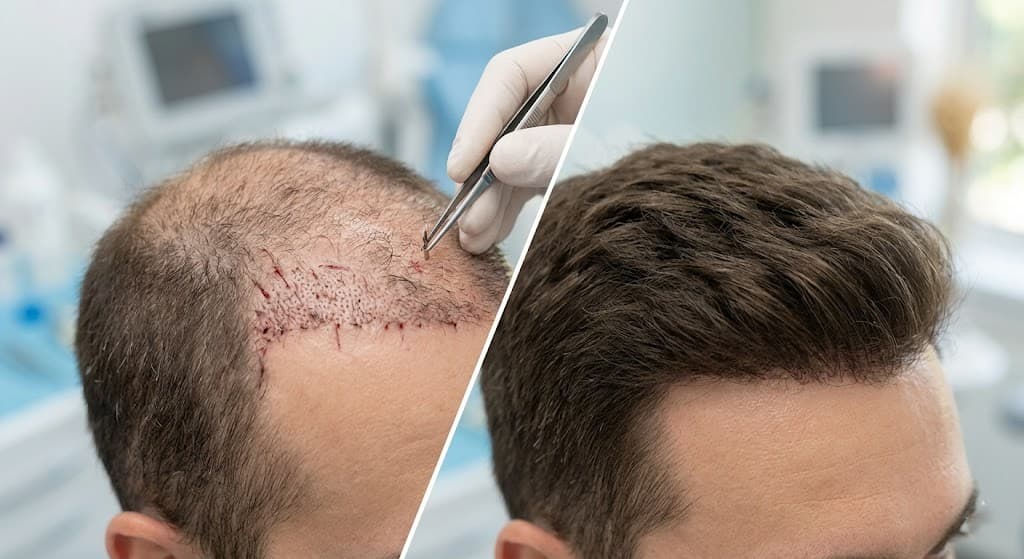
What is Hair Transplantation?
Hair transplantation is a surgical procedure in which hair follicles are taken from areas with dense hair and transplanted to areas experiencing hair loss. It offers an effective solution especially for individuals with permanent hair loss who do not benefit sufficiently from medical treatments. Hair loss is a common problem that psychologically affects millions of men and women worldwide. Thanks to modern surgical techniques, hair transplantation has made it possible to achieve permanent hair with natural results.
Who is Suitable for Hair Transplantation?
The hair transplantation procedure is generally performed on men and women who experience permanent hair loss due to genetic, hormonal, or other health-related reasons. In male pattern hair loss (androgenetic alopecia), hair follicles in the nape and sides are usually resistant to shedding, so hair is typically taken from these areas. It can also be applied in cases of local hair loss following burns, traumatic injuries, or certain skin diseases. Although there is no general upper age limit for the procedure, it is generally considered suitable for individuals over the age of 22.
What are the Hair Transplantation Methods?
The most commonly preferred techniques in hair transplantation are as follows:
1. FUE (Follicular Unit Extraction):
This is the most common method of modern hair transplantation. Hair follicles are individually harvested from the nape area using micromotor devices and placed in the bald areas in the natural direction of hair growth. In the Sapphire FUE technique, procedures are performed with special sapphire tips, which results in less tissue trauma, faster healing, and an almost scarless outcome.
2. DHI (Direct Hair Implantation):
In this method, the harvested hair follicles are directly implanted into the target area using a special pen-like device. The procedure can be performed without shaving the hair. Since there is no need to open channels, the healing process is shorter and the risk of damaging existing hair is reduced.
3. FUT (Follicular Unit Transplantation):
In the older FUT technique, a thin strip of tissue is taken from the nape area, hair follicles are separated from this strip, and then transplanted to the bald area. With advancing techniques, FUE and DHI have surpassed the FUT method today.
4. Scalp Micropigmentation:
In this non-surgical treatment, the appearance of hair follicles is mimicked by injecting pigment into bald areas. It can be used as a cosmetic solution especially in cases of regional hair loss and when surgical methods are not suitable.
5. PRP Therapy (Platelet Rich Plasma):
Serum obtained from the person's own blood is injected into the scalp to revitalize hair follicles. PRP can also be used as an additional method to support healing and hair growth after hair transplantation.
How Does the Hair Transplantation Process Progress?
Before the operation, the cause of hair loss is investigated by a dermatologist or plastic surgery specialist. Necessary laboratory tests are performed to rule out vitamin-mineral deficiencies, hormonal disorders, or other underlying health problems. Before the surgical procedure, the area is numbed with local anesthesia. According to the chosen method, hair follicles are collected and the transplantation is performed with attention to natural distribution and direction of growth.
The duration of the operation varies depending on the size of the area to be treated and the technique used, but it usually takes about 6-7 hours. At the end of the operation, the patient is usually discharged on the same day.
Expected Process After Hair Transplantation
In the first days, the bandage is removed and hair washing is started as recommended by the physician.
Temporary side effects such as redness, crusting, and mild edema in the operated area are normal.
The "shock loss" phase is observed within the first 2-4 weeks; after this temporary hair loss, permanent and healthy hair begins to grow.
Noticeable hair growth is observed in 3–6 months; a fully natural appearance is achieved at the end of 1 year.
Special care or long-term medication is generally not required; shampoos and care products recommended by the physician can be used.
Points to Consider After Treatment
Heavy physical activities, sauna, Turkish bath, sunlight, and excessively hot water should be avoided in the first weeks.
Smoking, alcohol, and caffeinated beverages should be limited in the first days.
Avoid contact, scratching, or trauma to the transplanted area.
It is recommended to keep the head elevated and use a soft pillow during sleep.
Required medications and lotions should be used as instructed by the physician.
If suspicious infection or severe redness-swelling occurs, a physician should definitely be consulted.
Will There Be Scarring After Hair Transplantation?
With modern techniques such as FUE and DHI, there is generally no visible scarring; in the FUT method, a thin scar may remain but it is covered by hair. Mild swelling, redness, or itching usually resolves spontaneously within a few weeks.
How Are Hair Transplantation Prices Determined?
Hair transplantation prices vary depending on the method to be applied, the number of grafts (hair follicles) to be transplanted, the experience and equipment of the surgeon and center. Prices vary from country to country, but Turkey has taken its place among the countries that offer cost-effective and high-standard hair transplantation services globally. A specialist examination and hair analysis are required to determine the final fee.
In new techniques such as DHI or Sapphire FUE; the number of roots to be transplanted, the number of sessions, the infrastructure of the clinic where the procedure is performed, and the experience of the physician are influential. Instead of making a choice based solely on price, the success rate of the procedure, safety standards, and the physician's level of expertise should also be considered.
Frequently Asked Questions
1. Is hair transplantation treatment permanent?
Yes, the transplanted hair follicles are generally permanent and resistant to shedding. However, results may vary depending on individual factors.
2. Is hair transplantation painful?
Since modern hair transplantation procedures are performed under local anesthesia, no pain or significant discomfort is experienced during the procedure. Mild sensitivity may be observed afterwards.
3. Will my hair grow immediately after the procedure?
The transplanted hair may shed in the first weeks (shock loss), but it starts to regrow from the third month. Full results are usually seen in 6–12 months.
4. Can hair transplantation be performed at any age?
Experts generally consider hair transplantation suitable for individuals aged 22 and over. However, the decision is made after medical evaluation.
5. Can hair transplantation be performed on women?
Yes, if the cause of hair loss is appropriate, hair transplantation can be successfully performed in women as well.
6. What is the difference between FUE and DHI?
In the FUE technique, after the hair follicles are extracted, channels are opened in the bald area and the follicles are placed. In the DHI technique, the hair follicles are directly implanted with a special pen; this accelerates healing and does not require shaving.
7. Will there be scarring after the procedure?
With hair transplantation performed using modern methods, there is generally no noticeable scarring.
8. Why do hair transplantation prices vary?
Prices vary depending on the technique to be applied, the number of grafts, the patient's hair structure, the experience of the team performing the procedure, and the equipment of the center.
9. Can hair fall out again after transplantation?
The transplanted hair follicles generally do not shed. However, natural hair may continue to fall out due to aging and other health reasons.
10. When can I use regular shampoo?
Generally, care can be performed with the shampoo recommended by your physician after the first week. Standard shampoos can be used after 3-4 weeks.
11. What is shock loss?
"Shock loss" refers to the shedding of some of the transplanted hair in the first 1-2 months after hair transplantation. It is not a cause for concern; permanent hair starts to grow afterwards.
12. When can I return to work/school life after hair transplantation?
how can I know?Most people can return to work or social life within 2-7 days; the redness and scabbing that occur disappear in a short time.
13. What should I pay attention to after the operation?
It is important to protect the head from impacts, avoid strenuous exercise, stay away from smoking and alcohol, and follow the instructions given by the physician during the first weeks.
14. Do transplanted hair follicles look natural?
If the technique is applied correctly, the transplanted hair provides a natural and aesthetic appearance in accordance with the person's own hair characteristics.
15. What should I pay attention to for a successful hair transplant?
Choosing an experienced specialist and a well-equipped healthcare institution is the most important step for accurate results.
References
World Health Organization – Hair Loss and Hair Transplantation
International Society of Hair Restoration Surgery (ISHRS) – Patient Guides and Standards
American Academy of Dermatology (AAD) – Hair Transplantation Overview
M. Jimenez et al., “FUE Hair Transplant: Guidelines and Best Practices,” Dermatologic Surgery, 2020.
British Association of Dermatologists – Patient Advice on Hair Transplantation
U.S. National Institutes of Health – MedlinePlus: Hair Transplantation